I never want to live in a world without birds.
How a puffin saved me
Iceland, August 2024
It was an early August morning when I left the hostel. To be honest, I was in a really bad way. Every fabric of my being wanted to stay in bed, cry, and overthink it, but it was the puffins that got me moving. Despite visiting Iceland before, I had yet to see puffins. Let’s just see that the timing was always “off.”
This morning would be different, or at least I hoped.
The drive was harrowing. I took it slowly down the winding, thin road that led to Dyrholaey. Clutching the steering wheel of the big blue bus, I marveled at the Icelandic wind. It seemed angry. I imagined a wind god standing at the end of the road, spear planted, yelling, “You shall not pass!” Maybe he would pity this lone woman with her camera.
Battered by the sideways rain, I took my first steps up towards the lookout where the cliffs were. A thick fog had settled across the cliffs, obscuring the black sand beach below.
When I reached the lookout, I stared out at the mist as if staring alone would produce a puffin. I can’t tell you how long I stood there, but I was hopeful.
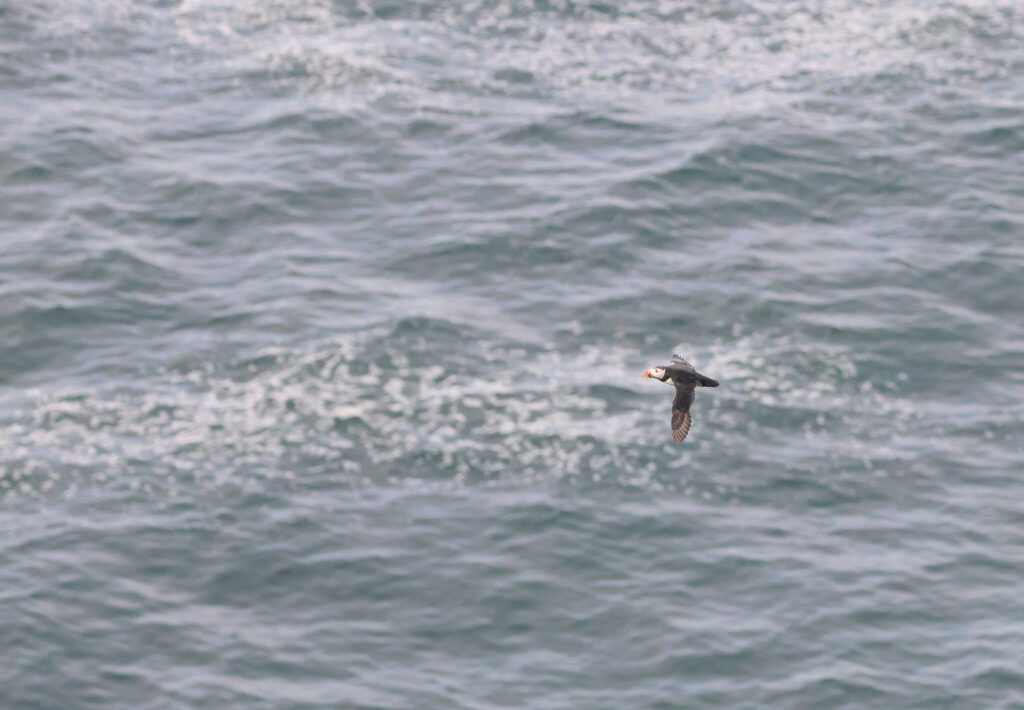
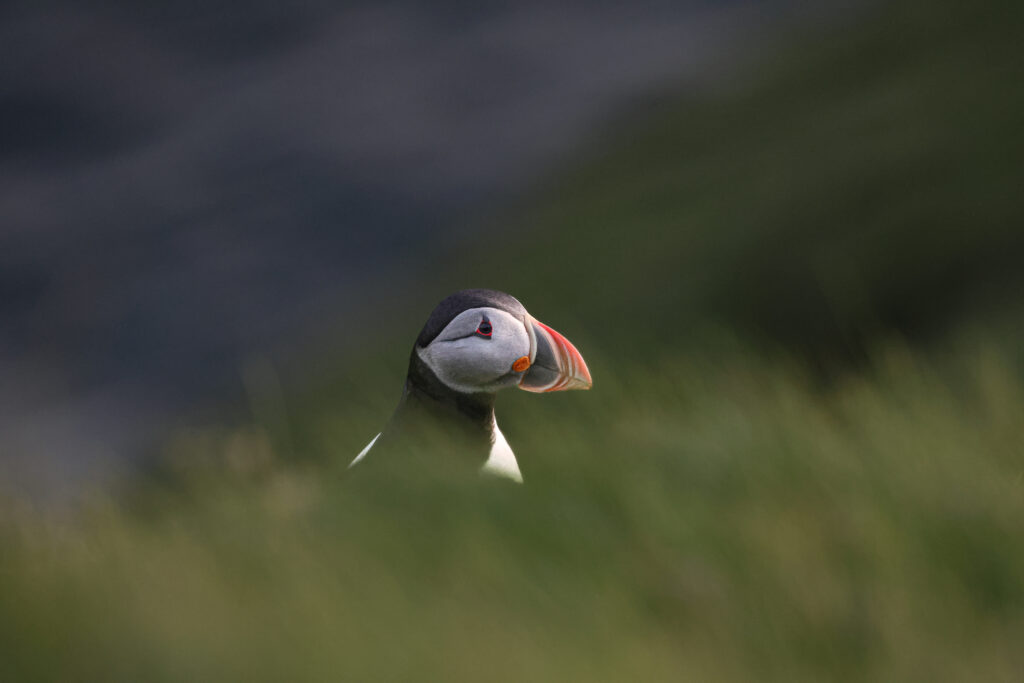
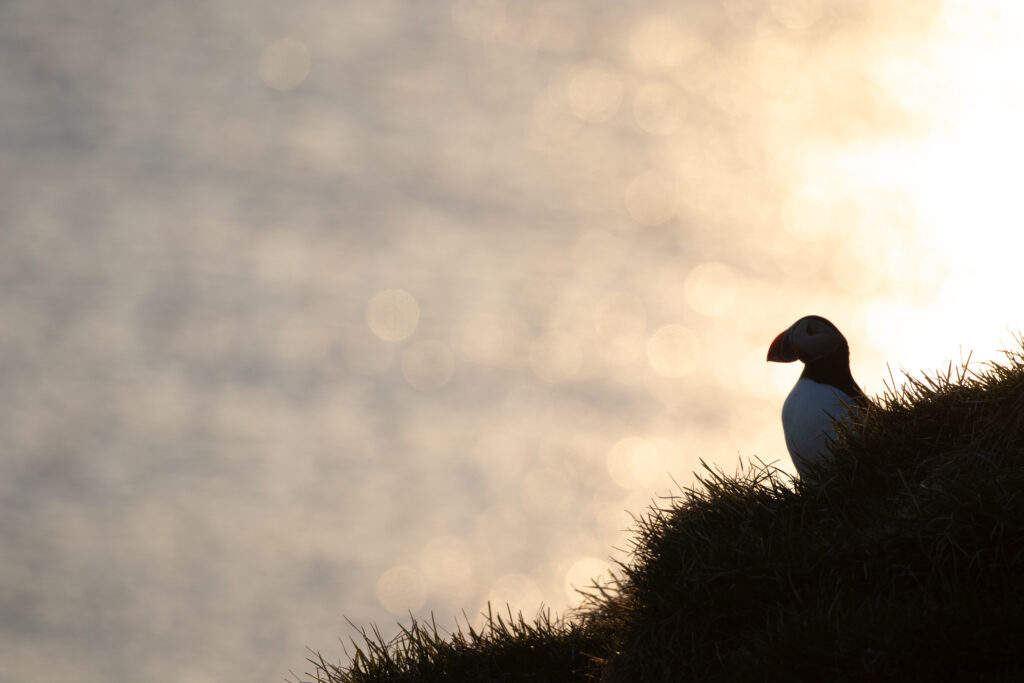
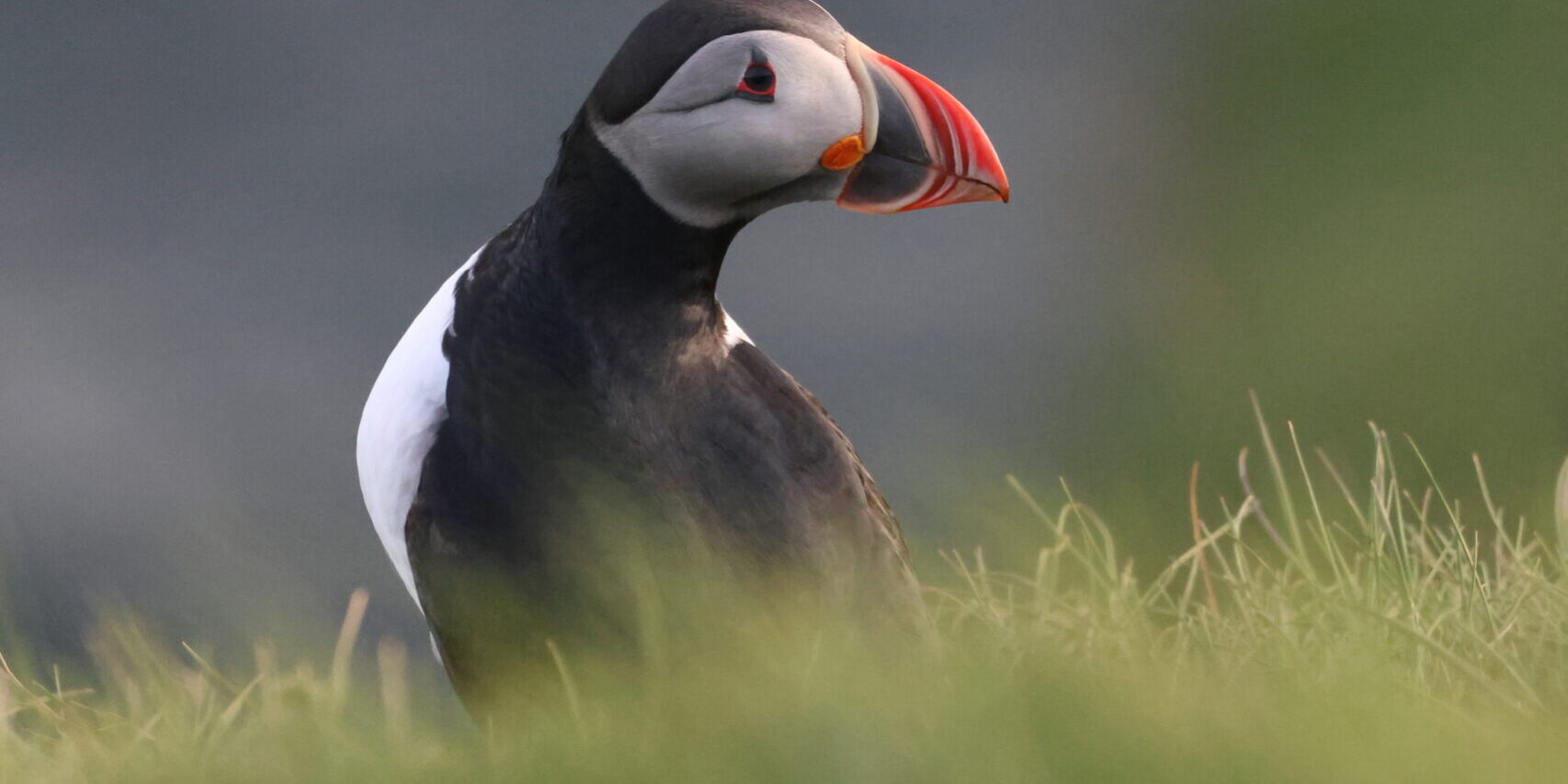
Then suddenly, in the morning gloom, a puffin emerged from his burrow. He craned his head towards me as if to say, “I heard you were looking for us!”
It took me a moment to lift the camera. I was so overcome with joy. For the first time, I saw and photographed a puffin.
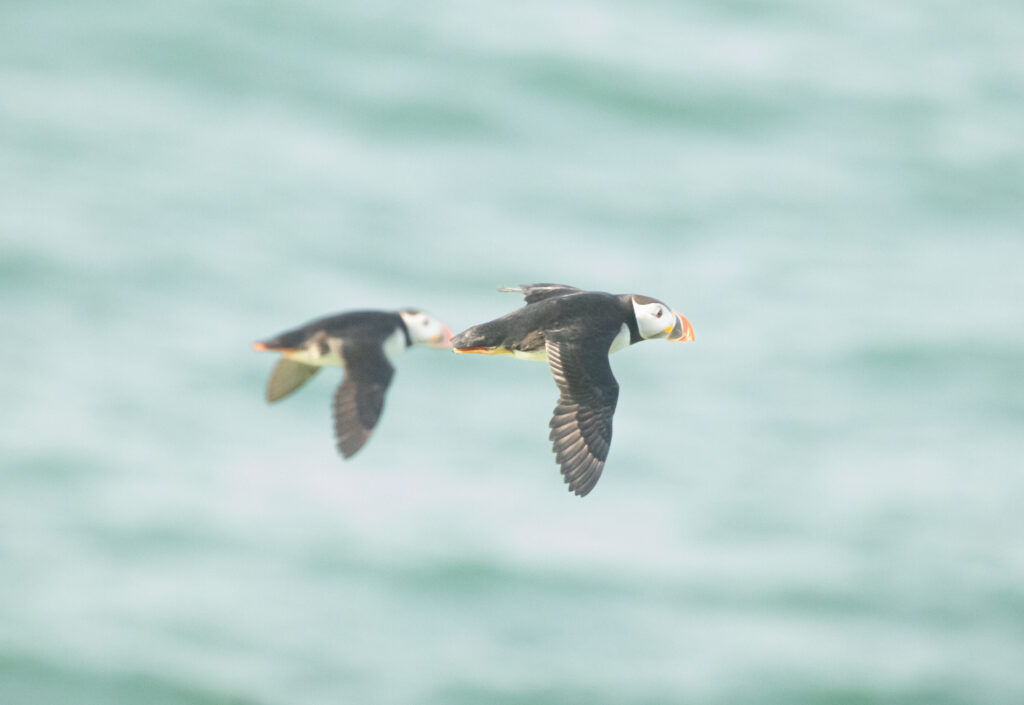
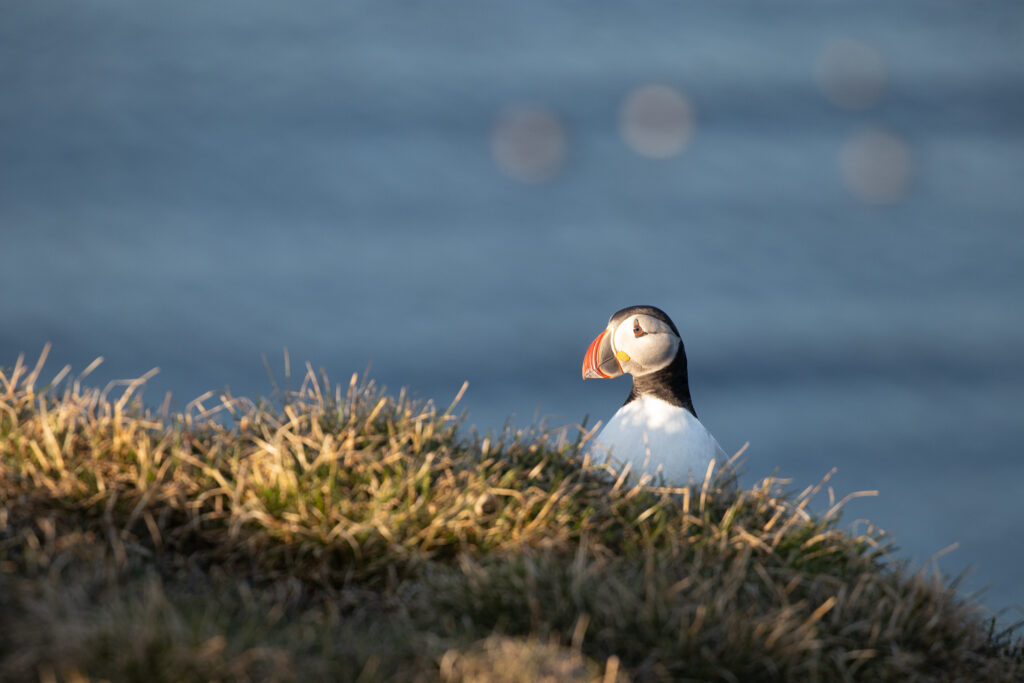
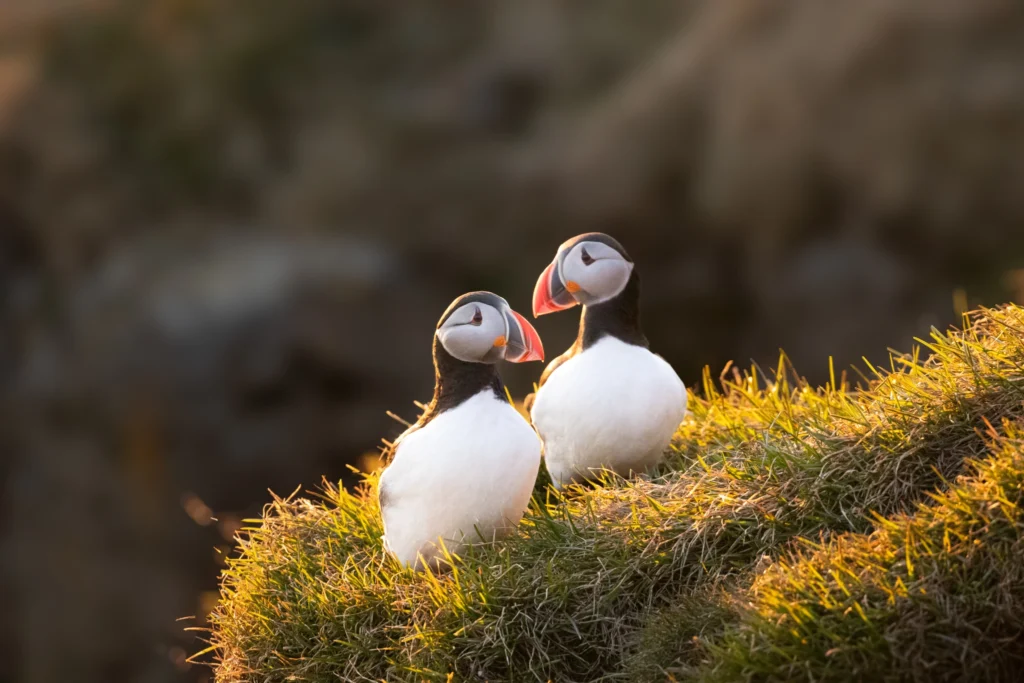
I returned to that spot many more times that trip. For three days, I settled in on Westman Island to observe and photograph the colony there. Suddenly, what had troubled me was gone. I had found the puffins, I had found a purpose.
Beyond that, I have returned to Westman twice and even sailed to the remote Grimsey Island last spring to see the colony’s first arrivals.
The puffins had saved me, and now I only feel it is right to give back. But there’s a dark side in wildlife photography that not many talk about. It is the side that keeps me going.
Puffins, like many other seabirds, are in trouble. Now more than ever they need our help.
The puffin wrecks
When I was a little girl, my grandmother gifted me a poetry book. One of them was titled “A Puffin and his Muffin.” There was something about the illustrated puffin that captivated me. I still have this book and my obsession with the clown of the sea.
A few weeks ago, I was devastated to read about ‘the puffin wrecks” off the coast of the UK, France, and Spain. In ornithology, a wreck is defined as a devastating loss of a species due to starvation, exhaustion, or a severe event.
This can’t be right, I said to myself as I read the news. Thousands of puffins, both dead and alive, were washing up on the shores of the EU and the UK. Puffins spend their winters at sea alone. They feed on herring, sand eels, and other small fish and only return to shore in the spring to begin their breeding season.
Back-to-back storms in the North Atlantic were battering these beloved birds, along with other species. Suffering from exhaustion, dehydration, and starvation, the birds are unable to feed, thus resulting in this “wreck.”
How heartbreaking. Nature is so fragile. All it wants is to survive, and it is becoming increasingly difficult for it to do so on Planet Earth. Last week, I attended a webinar on Climate Change and Wildlife and learned that North America has a net loss of 700 million birds since 1970. That number is staggering.
This news can be quite depressing, but there is good news. As far as the puffin wrecks are concerned, multiple organizations in Europe have banded together to rescue the puffins, including the Cornwall Wildlife Trust, to which you can donate directly. How do I get that job?!
We are all curious what colonies this tremendous loss of the already red-listed species will affect. I will be visiting Grimsey and Westman again this season to document the colonies there, and I am interested in whether a loss will be noted.
How you can help
As stated, it is sad to read of this news and these numbers, but it is key that we all take action to help birds. We all can do something to keep birds around. Here are a few ways to help puffins and birds, no matter where you live:
- Donate to the Seabird Institute in Maine or join the Audubon Society. Both are committed to protecting birds and are constantly relaying information to the public on how we can take action.
- Write a letter to your Senator and Congressman that addresses key issues surrounding birds, such as the Migratory Bird Treaty Act and the Endangered Species Act. Oppose any proposal that weakens it and state why you are in support of these acts that are necessary to keep birds in North America safe.
- If you are a wildlife photographer, share your love for birds with your photos. Create empathy through visual storytelling with the species. Check out my Instagram for tips on how to tell stories with bird photography by commenting BIRDS on my puffin photo post.
- Plant a native pollinator garden. Don’t use pesticides and keep your outside lights off at night to help migrating birds.
- Minimize plastic use. This is a tough one. It seems here in the US, there is SO much plastic. It drives me crazy! There is a plastic crisis in our oceans, and guess who feeds there, as well as along the shores? Seabirds and their babies. Imagine sitting down at night to a dinner plate with plastic mixed in with your food? That is what these birds are facing. If you want to take it a step further, participate in a beach cleanup. Last year, I participated in a beach cleanup in Iceland. I was appalled by how much trash I pulled off the beach, most of it washing in from the ocean. Straws, fishing nets, bottles, and toothpaste containers. It was really eye-opening and made me think that we can do better than this.
- Last but not least, if you love puffins or know someone who does, you can purchase my Atlantic Puffin Calendar, which features twelve thoughtfully curated puffin photographs I have taken in the subarctic region. All profits go to the Seabird Institute in Maine.
In closing, where there is kindness, there is hope.
Let’s all do our part to give birds a chance!