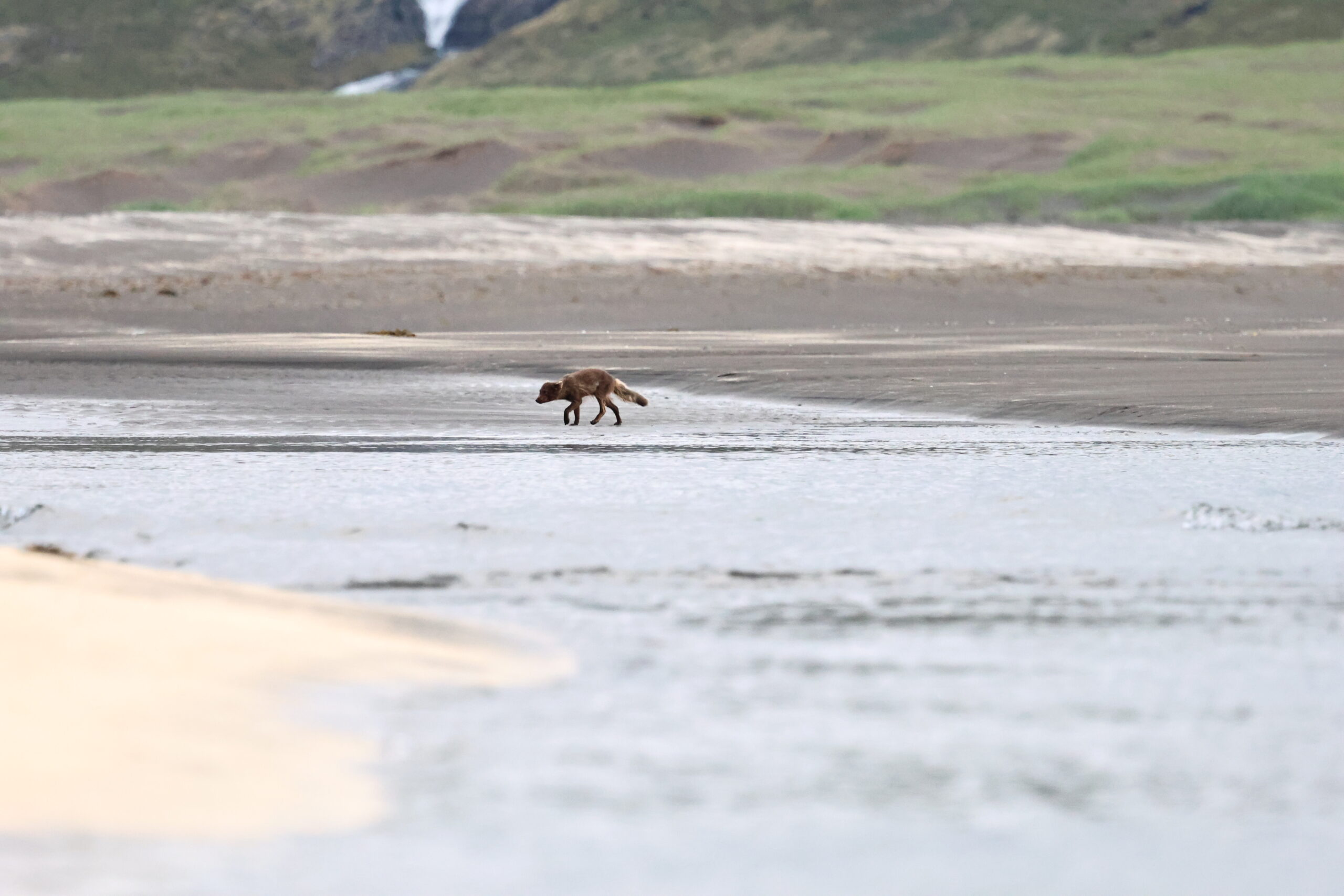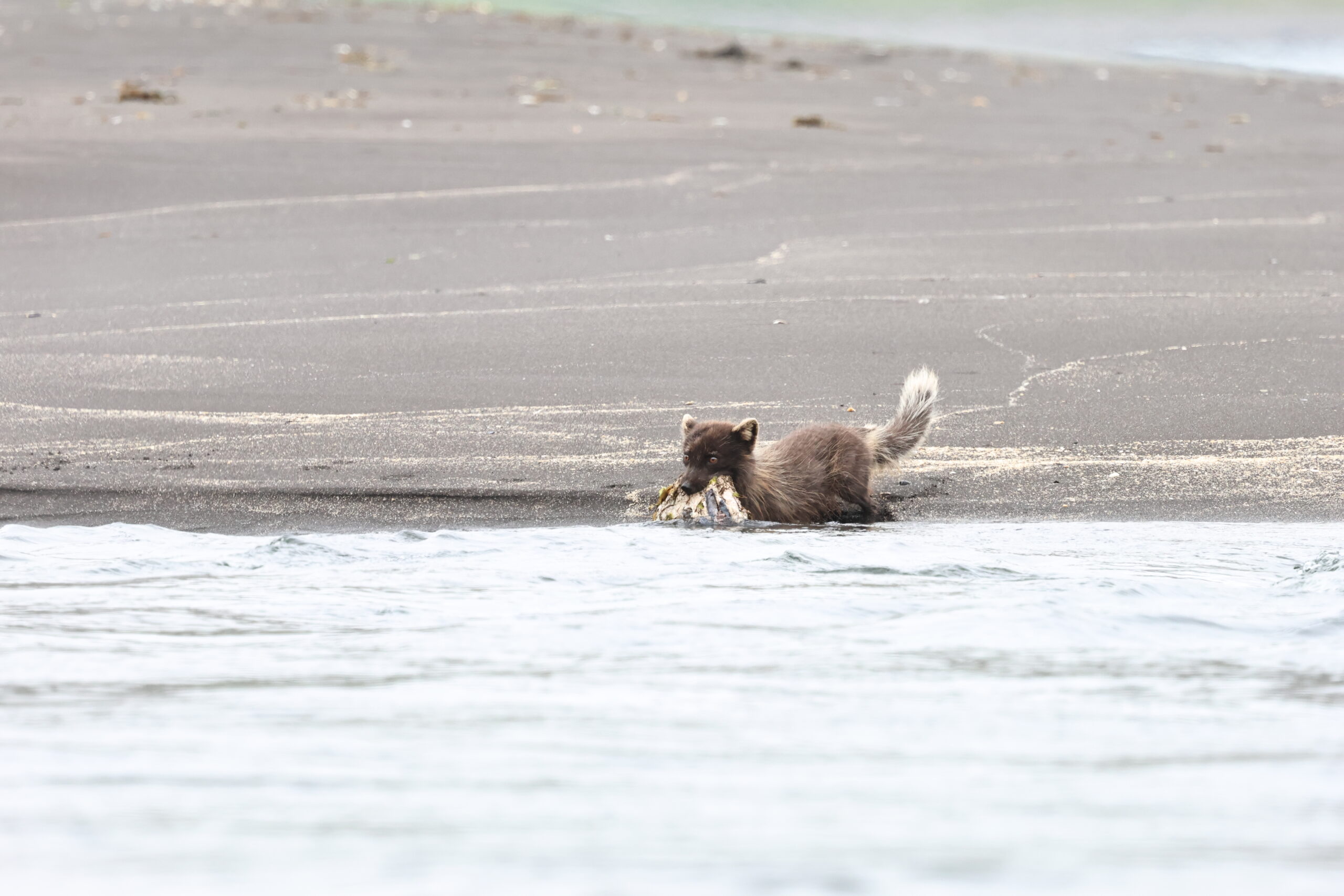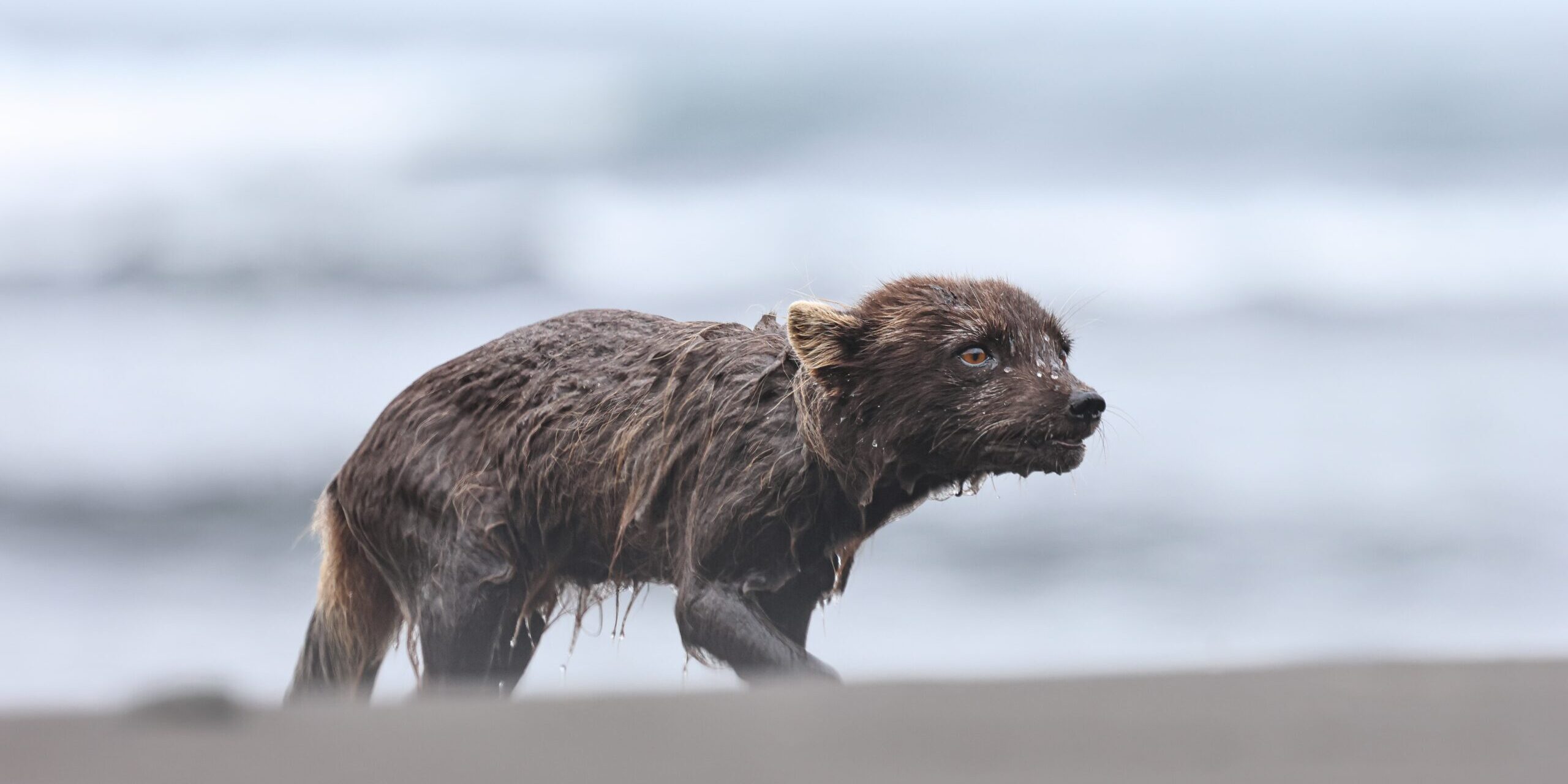
Activity on the beach was high. The sun crept above the remote fjord as the creeping fog cleared. I pressed my hips into the black sand, too determined to notice the dampness slipping through my layers. Trembling with anticipation, I steadied my camera on the driftwood in front of us. We already saw her in the distance, trotting along the white sand beside the lapping tide. My viewfinder revealed a large fish head in her jaws.
A glacial river stood between the fox and us. She entered the water with impressive courage. The tide took her sideways; you could almost imagine her determined feet paddling below the surface. I hit the shutter, locked on the subject, my chest tense; I had not even taken a breath the entire time.
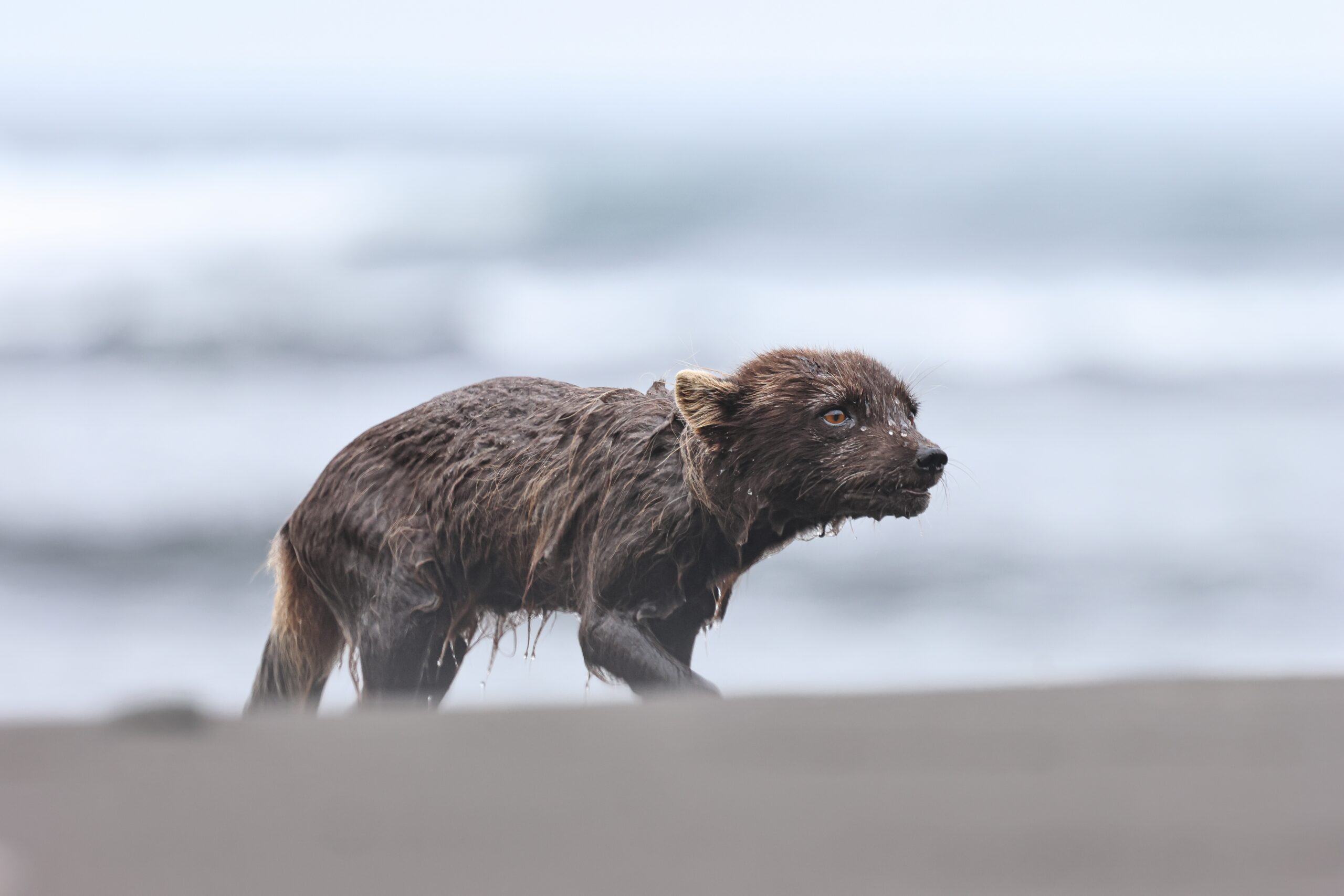
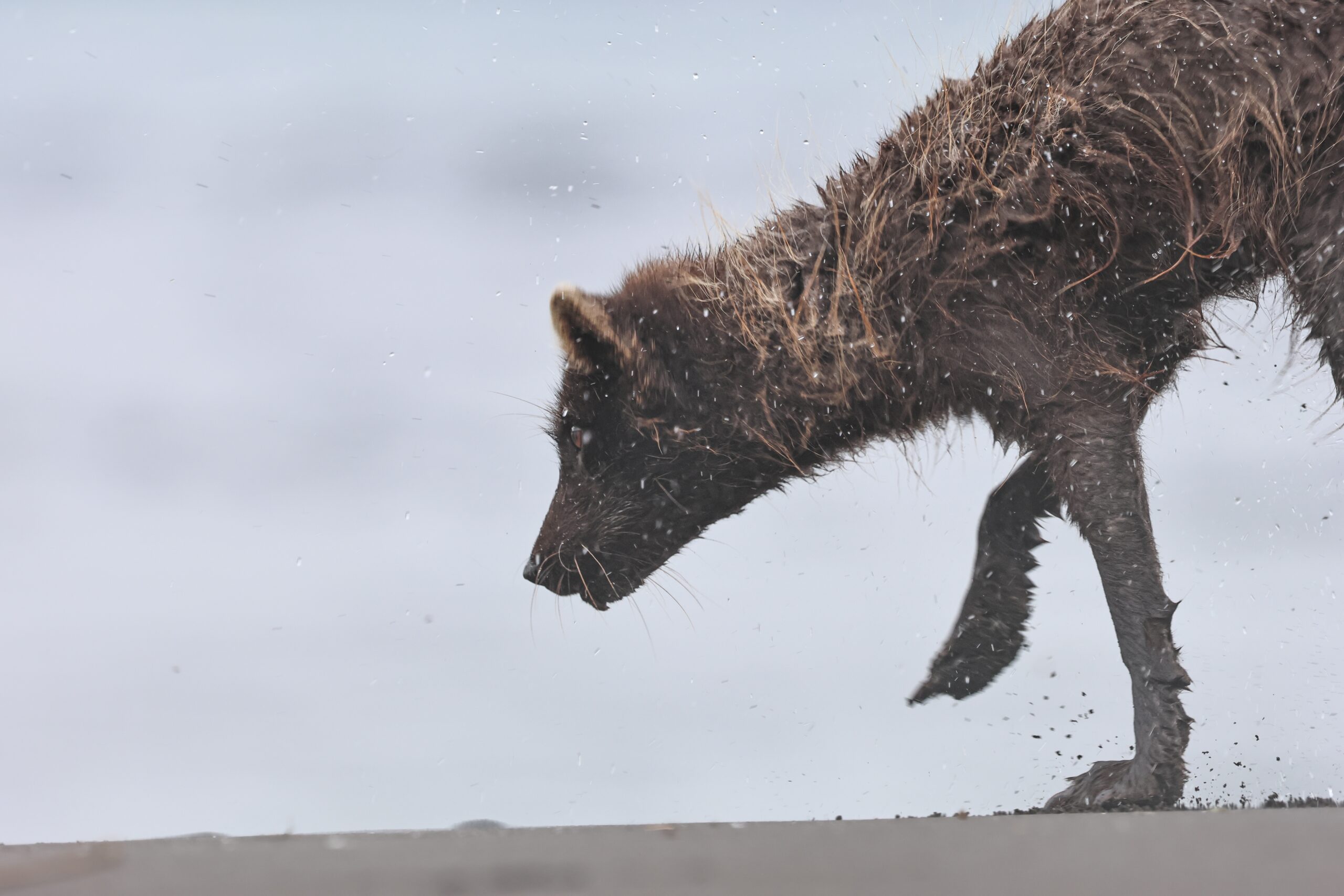
She emerged on the river’s bank, empty-mouthed and soaked. As she paced, my heart sank knowing her loss meant more than; it meant the difference between starvation and survival for her family.
This was the Arctic fox; a story of resilience.
Arctic fox emerges from river crossing Hornstrandir June 2026 ©ariellelane
Location is everything
Hornstrandir, Iceland
66.3937° N 22.5749253° W
Hornstrandir is a nature reserve in Iceland’s West Fjords region. Remote and rugged, it is a place destined for travelers who seek the wild on an island where tourism has encroached on almost everything.
That is why I chose it to see Arctic foxes as they are meant to be: wild, free, and untamed.
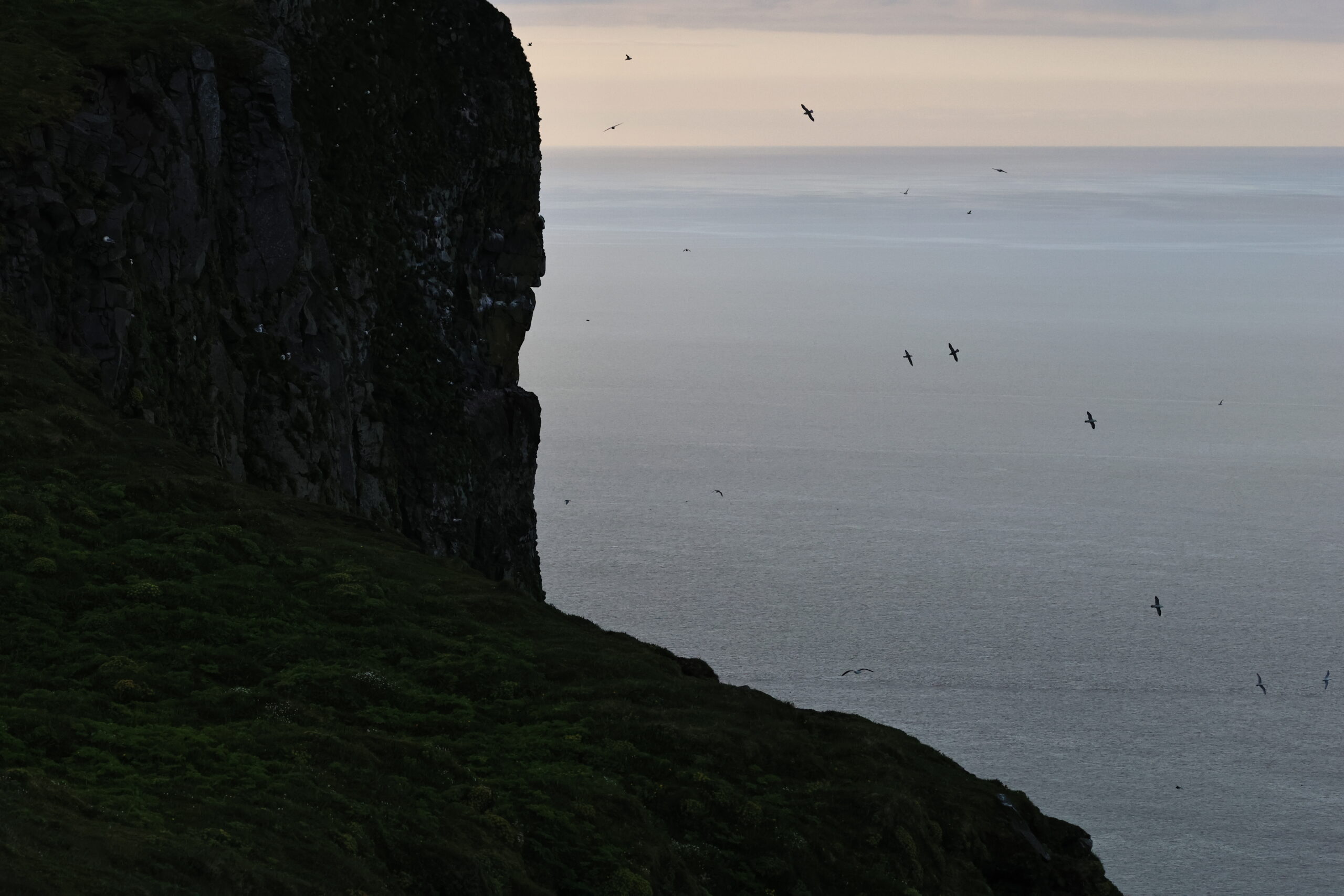
Like much of Iceland, Hornstrandir feels alive. The ever-changing light and elements are at their peak here, offering visitors everything from isolated fjords to emerald cliffs and tundra. In summer, the fields come alive with angelica, thyme, and rhodiola rosea. Glacial streams snake through green lichen, tumbling down cliffsides alive with soaring seabirds.
In winter, the landscape looks quite different. Heavy storms, relentless winds, and snow blanket the fields and beaches, transforming them into a frozen tundra. In Norse mythology, I would liken it to Jotunheim, the land of the gods’ adversaries, full of uncertainty and the elements.
Still, life endures here. At the shore, harlequin ducks peep and dive amongst the Eiders. Harbor seals float and dive by day, and the northern lights dance and hum on a clear evening. You will watch in disbelief as the Arctic wildlife seems to thrive in all weather.
It really is a miracle.
You never know what you will witness on Hornstrandir, but one thing is for certain. Somewhere, no matter what the weather gods deploy, an Arctic fox is defending its territory atop the cliffs or dunes.
You just have to be patient enough to witness it.
Behavior and environment
I have been to Hornstrandir several times, first falling in love with it in the summer of 2023. For me, I feel most alive in these remote places, these places that I refer to as “edges” in the world. Last winter, I spent a week there, battling unbelievable conditions that cost me a camera body but locked in my love for wildlife photography and my fascination with Arctic wildlife.
Perhaps it is why I love Arctic wildlife so much; they thrive in conditions I have suffered in. Yet I return again and again, searching to capture moments only a few would see.
This was one of those times.
It was June of 2026, the season of the midnight sun. A group of photographers, two guides, and I spent six nights camping along the northern side of the reserve, far away from any facilities or cellular signal.
Our objective: to photograph Arctic foxes in the wild.
When I arrived, I had a story in mind. Images of foxes aglow in the midnight sun, perhaps with their pups or atop a bed of lichen, ran through my photographic fantasy roll.
What I captured was what I least expected: survival and a rarely observed behavior.
Arctic foxes are Iceland’s only indigenous mammal. If you have ever experienced Iceland’s winter, you can imagine how well equipped they must be to survive in a place where the main attraction is the world’s harshest weather. Here are a few facts about Arctic foxes that make them “storm-born”:
- Heavy, dense coat of fur. An Arctic fox’s coat would put a 66 North puffer to shame.
- Fur-lined feet for warmth and traction
- A compact, short-legged body conserves energy and reduces heat loss. More surface area = greater heat loss, which is why our Arctic fox friends are about half the size of our North American red fox.
- A thick, bushy tail helps the fox stay warm when resting during a storm.
But did you know Arctic foxes can swim, and they are good at it?
As land mammals, Arctic foxes spend most of their lives on land, entering water only for practical reasons like in this case: to hunt.
The Arctic fox’s diet consists mostly of seabird eggs, dead seals, carrion, invertebrates, fish, and birds. Much of this is dependent on territory.
During our time here, we observed two categories of Arctic foxes: beach foxes and cliff foxes. Each team had its own challenges. For team beach, the challenges were food and the tide at the river crossing.
I chose team beach mostly because I found the landscape near the beach, as well as the dynamics of the foxes and the tide, interesting.
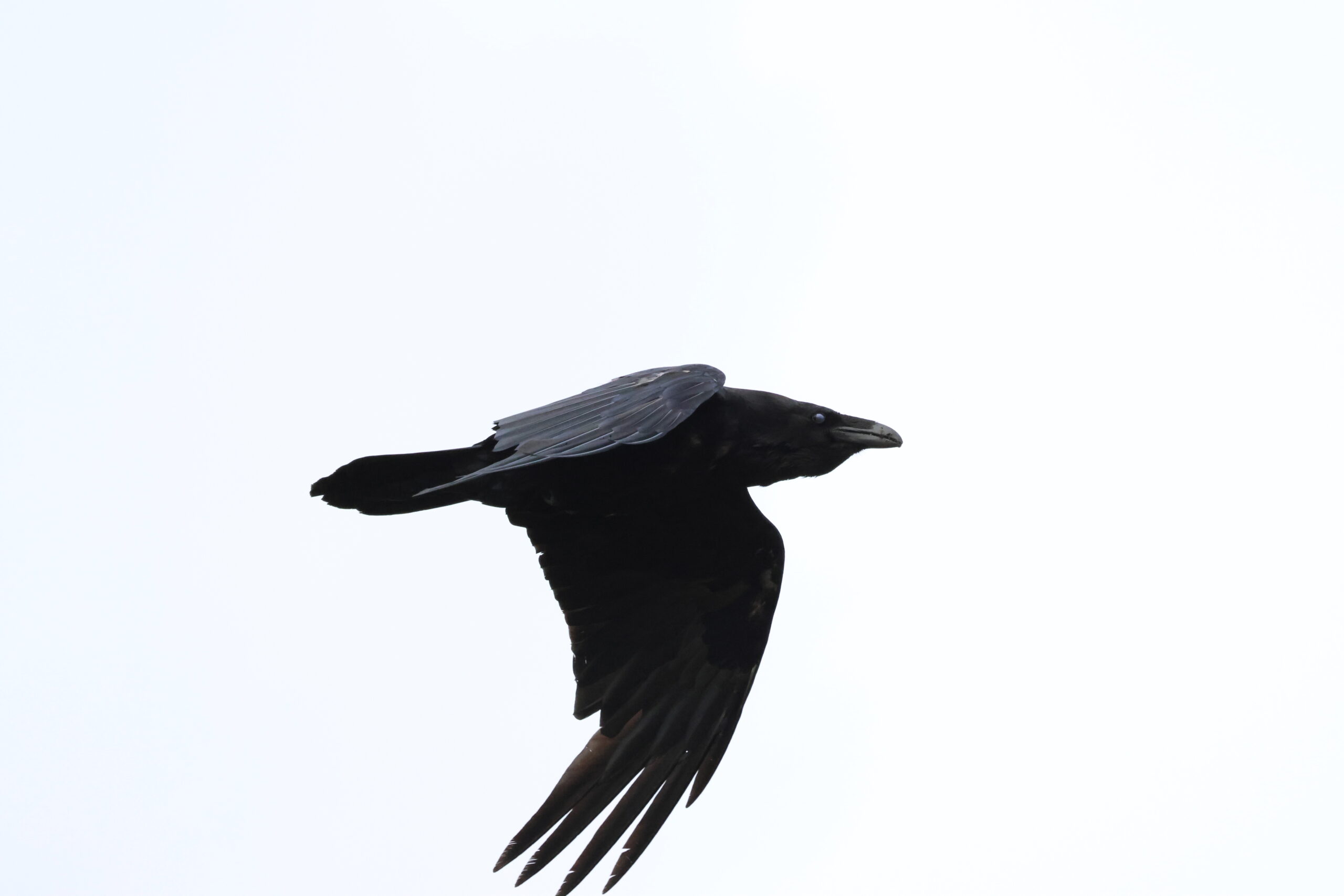
Every day I observed the prints, watched the tide, and noted wildlife behavior, such as wild ravens patrolling the area and resident Harlequin ducks.
This morning, I wish I could say it was more than a hunch. We knew the fox was crossing at low tide, but time wouldn’t let us stay there for it. But I had a feeling.
For a full 24 hours, a storm battered the area, bringing 45 mph winds and heavy rain. Activity on all levels was low. We weren’t the only ones resting in our tents; even the watchful raven was nowhere to be seen.
The storm cleared, bringing a morning of creeping fog, golden sunlight, and misty cliffs. At the beach, prints pattered in the black sand towards the river and between the dunes.
We chose a piece of driftwood to camouflage behind, perfectly situated facing the river. The driftwood provided perfect cover and a makeshift tripod for our cameras. Two things I believe no wildlife photographer should ever skip are knowing and understanding the habitat, as well as the behavior and patterns of your subject.
It can make the difference between capturing a photo of an animal looking back at you and capturing a behavioral shot that tells a story.
I wish I could say the best part of the moment was the photograph or knowing my hunch was right, but the best part was just witnessing it. To watch nature unfold, a glimpse behind the picture-perfect portraits, fluffy coats, and golden eyes into the story of the Arctic fox;
A true story of survival.
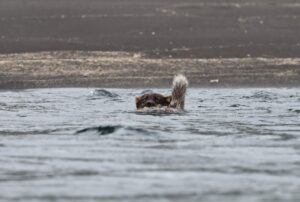
Arctic fox crossing a river with a fishhead Hornstrandir June 2026 f/ 7.1 1/1000 ©ariellelane
If you enjoyed this article, you also may want to check out my blog about the whole experience: Survival: The Story of the Arctic Fox
Gear
Packing for a photography trip on Hornstrandir is about as difficult as reaching it.
Personally, I find traveling internationally with your gear is a nightmare. The level of stress I feel at the check-in counter or at security, hoping they don’t weigh my bag, is crippling. Over the years, I have alternated between a rolling hard carry-on (ideal for my back during long airport waits) and a camera bag I use in the field.
If you are flying to Isafjordur, I recommend packing your gear into a camera bag because it will fit under your seat more easily than a rolling bag.
I packed everything else for the trip in a waterproof duffel, including clothing, hiking poles, and extras.
Waterproof and windproof layers you don’t mind getting dirty are key, along with sturdy ankle-high boots, trekking poles, and plenty of warm socks. Hornstrandir is rugged and has very few established walking paths.
I also highly recommend a solar panel and charger for your batteries, plus a comfortable camera holster so you can stay hands-free while hiking. I also recommend packing a thermos and dry bag to keep a pair of sleeping clothes in.
Here is my gear packing list for Hornstrandir photography:
- two camera bodies
- wide-angle lens for landscape shots
- zoom lens such as 100-500 or 600 focal length prime lens
- Tripod if you intend on doing landscape. I would recommend a light travel tripod.
- Extra batteries ( at least 5 for a 6-day trip)
- Solar charger and panel
- charger
- MacBook or iPad to offload your photos
- 2 waterproof dry bags to store your gear and a pair of sleeping clothes separately
- Plenty of lens cloths
- Camera cleaning kit. Iceland is infamous for dust, grit, sand, and water!
- Camera holster. I didn’t have one then and regretted it. The hiking here can be very rugged. Being hands-free and balanced is so much nicer than carrying your camera over your shoulder during river crossings.
- Waterproof outer layers, jacket, and high-ankle waterproof boots
- gloves
- Plenty of warm socks
- Buff and wool base layers
- thermos
- water bottle
- Camera bag that you are comfortable hiking with
- WP Camera jacket