Nature itself is the best physician – Hippocrates
The timeless power of birds: winged wonders that have captured so many hearts and, on the way, healed a few of us.
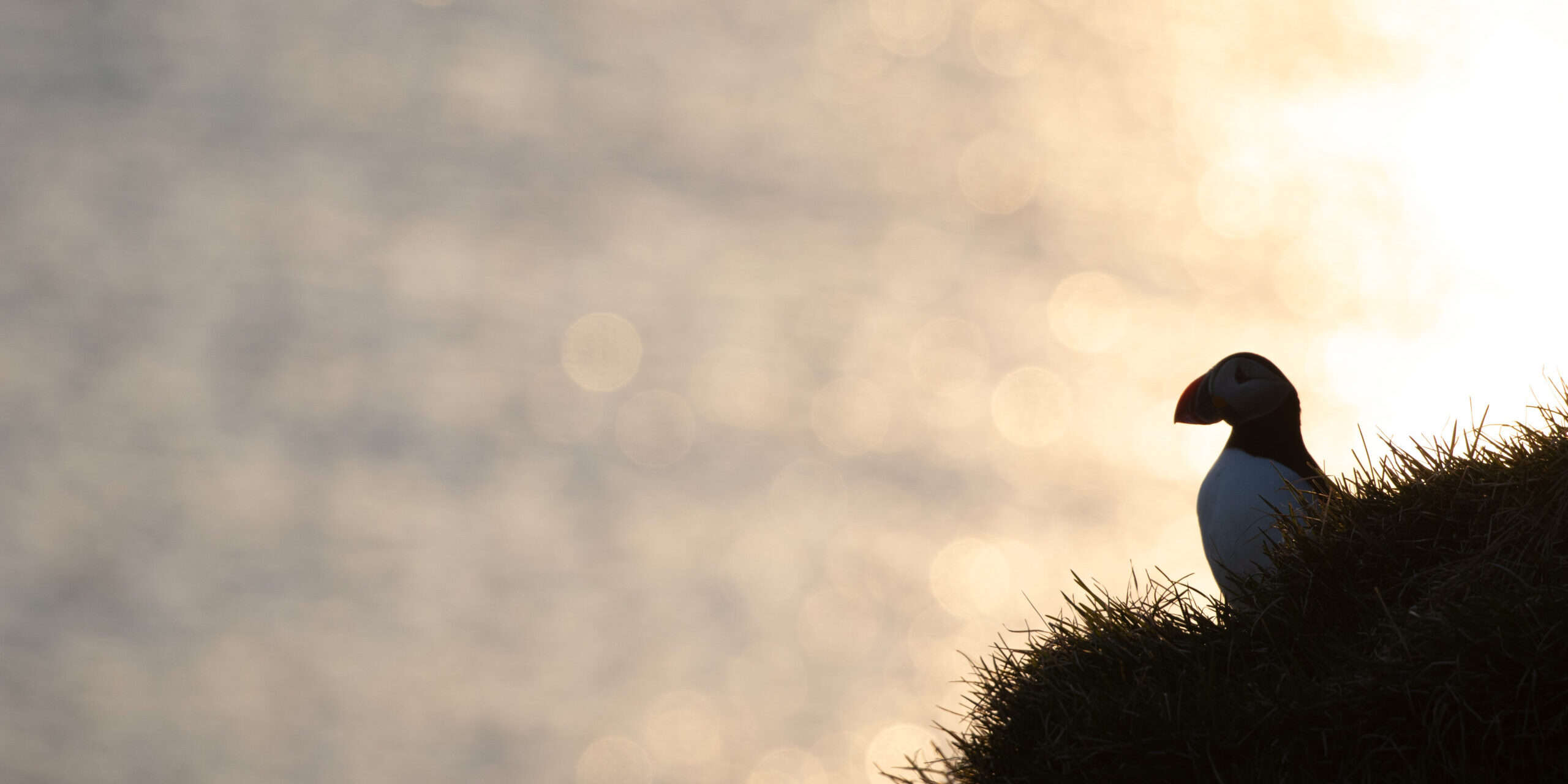
The puffin that saved me
The weather matched my mood. Heavy raindrops pelted the window, creating a chaotic symphony with the wind. The morning was about as welcoming outside as one could be, but this was Iceland, and the weather gods rarely cooperated.
It took every last bit of motivation to peel my tear-stained face away from the pillow. I resisted the urge to check my phone or reread the tormented journal entry I had scribbled before sleep took me. Instead, I got dressed and hefted my already packed camera bag over my shoulder.
A haunted silence filled the hostel downstairs. I was relieved. I wanted to bypass any how-are-yous, good mornings, or where-are-you-off-to-in-this-weather?
I was off to find a reason to be alive again.
The drive was brutal. On a scale of unsafe and stupid, it was at the top. My hands gripped the steering wheel of Big Blue, my affectionate nickname for the 4×4 camper I had rented. Every time I visited Iceland, I rented a big blue camper van, outfitted with huge tires and a snorkel. They all had different license plates, but to me, they were all Big Blue.
The van battled the wind as it crawled down the long stretch of empty road towards Dyrholaey. The disorganized utensils and belongings in the van’s rear kept colliding. No matter how much I secured them, they always fell. At one point, I lost sight of the road. I arrived at the parking lot, the only car in a sea of empty spots, a rare sight on Iceland’s famous puffin cliffs on the south coast.
After outfitting my gear with waterproof coats and cases, I headed towards the cliffs. Beyond the grassy cliffs, nothing but a sheet of gray stretched out. Yet I could still hear the waves pound the shore, as if they were as furious as I felt arriving on such a stormy day.
Honestly, I expected to see nothing. It wasn’t about photography today; it was about getting out of my own head and feeling alive among the elements, allowing the weather to express exactly what I felt inside: storms. If I was lucky, I’d find the bird I was looking for.
Suddenly, a colorful face appeared above the grass. It stretched towards me, curious and unfazed by the sideways wind.
I gasped. It was the first time I ever saw a puffin. A single puffin looked at me as I looked at him. My mood shifted. It was awe; it was love at first sight.
As I hit the shutter button, I began a love affair that would save me.
Suddenly, I was no longer an adult with problems and a camera in my hand, but a child at the living room window with my mom, watching the bird feeder.
When we do good, birds don’t miss it.
It was a typical October evening in Northeast Pennsylvania. The day was ending, but the sun wouldn’t set. Treetops swayed in the sudden wind, and rain poured from the grey sky like buckets. Brown leaves crunched beneath my shuffling footsteps. I tightened my grip on the coffee mug, hoping the liquid’s warmth would soothe the ache in my aging hands.
The weather was a mood. Gloomy and downtrodden, it promised winter’s inevitable death. I didn’t mind it. On occasion, I embraced my depression as a part of being an empath on today’s struggling planet. It had a beauty most people might not understand.
To my left, I heard wings flap. My attention shifted to the decorative juniper shrub where it emanated from. Another, then another, until I realized a flock of mourning doves was taking turns entering the large Douglas fir near the driveway. My dad had planted this fir tree over twenty years ago. It grew so large that my family had discussed cutting it down. They agreed to leave it after I explained how it benefited local wildlife by providing much-needed habitat for birds and small mammals.
The doves roosted in it for the night, and the idea that this tree gave them a safe, warm place for the winter soothed me. I watched their pink bodies flap and flutter around the tree until they found a suitable entrance into its branches.
It was a simple moment, a glimpse into a bird’s life, yet it meant so much to me.
What birds mean to me
My fascination with birds began in childhood. I am one of the lucky few whose parents, despite raising me in the city, managed to cultivate my curiosity about the natural world.
My mother showed me birds. Some of my fondest memories are standing with her at the living room window, watching the bird feeder, or racing down to the pond at our vacation home in the Catskills to photograph the chickadees.
I was the child who always brought home cicada shells, garter snakes, and anything else I could find in nature. Thirty years later, and not much has changed. I am still fascinated with nature, especially our winged friends. But there were many years when I wasn’t.
Prior to university, my mother unexpectedly passed away from chemotherapy complications. Naturally, it sent both my dad and me into a tailspin. After graduation, I locked away my art portfolio and camera, putting them out of sight. Years later, I recognized this was a way for me to try to grieve, but the reality was that it was my reconnection with what my mother and I loved together that ended up healing me.
Eventually, I rediscovered my love for nature when I visited Iceland for the first time in 2021. That discovery reignited a deep passion that led me to take up wildlife photography, found this blog, and eventually pursue advocacy. What is meant for you will always find you.
I had the pleasure of attending two art residencies on a small island called Hrísey, where birds take over during the spring migration. Thousands of Arctic terns, Common Snipes, Red-necked Phalaropes, Eider ducks, Northern Fulmars, and Godwits, among others, choose Hrísey as a breeding ground due to its untouched nature and ample habitat.
Both trips were filled with photography and writing, but mostly with nature immersion. I even sailed out to an even smaller island in the Arctic Circle to photograph Atlantic puffins!. Every night, I headed out with my camera to search for birds. I would sit on the moors listening for the mystical call of the Whimbrel or the Snipe’s winnow.
My roommate, a talented stitcher and art therapist, gifted me a sketch pad and some pencils. It had been years since I sketched, and I soon discovered the value of sitting outside, studying the landscape or birds, and creating lines with graphite.
Over time, this experience shaped how I connected not only with birds, but also with myself. I noticed my grief arise, among other buried feelings. I would stand on the cliffs, awed as I watched birds glide across the crimson midnight sunset, or fulmars flap past with watchful eyes. I’d raise my arms, swivel around, and pretend I, too, was soaring among the cliffs, letting the wind take me wherever it may, feeling the air glide between my feathers as I floated high above the sea.
Late at night, I’d lie on the heather and ask the universe for answers to questions I had buried long ago. I’d sketch the faces I saw in the fjord or note the sea’s color as the light shifted. Things I’d overlooked suddenly became breathtaking: the light sparkling across the fjord, or the sound of a whale’s blow.
I witnessed the arrival of the Arctic Tern, the world’s longest migration, completing 44,000 round-trip miles from Antarctica. Within a day, the soundscape changed; it was nearly impossible to walk past the marshes without the terns’ fluttering and cries overhead.
I experienced so much more, and it feels like an injustice not to list every bird, every encounter, and every moment I witnessed, although it was far too beautiful to capture in words.
These moments reconnected me with myself and Mom in ways I had never experienced. They shattered my faith in what I once thought was important. They encouraged me to be present and mindful, and to see the connection between myself and the rest of the world.
I am forever grateful for my time on Hrísey, where birdwatching and nature immersion healed me. I returned from the island not changed, but as the person I was as a child: curious, smitten by nature, and even more fascinated by birds.
But it wasn’t just because I enjoyed my time there; there’s actual science behind it.
The neuroscience behind why birds help us
When I returned from Hrísey, I wanted to learn why this relationship to my grief had changed. What about birdwatching and stillness in nature helped me so much? There was a tangible shift in the way I related to the loss of my mother, and it was no coincidence.
My research took me down a deep rabbit hole of articles stacked with neuroscience and evidence about how the specific emotion of awe can help us manage grief, depression, and sadness. In fact, many of the articles I found, and even books on the topic, discussed this specific feeling of awe in nature.
I felt awe on the cliffs at sunset; it kept me mesmerized by the soaring Fulmars and the Whimbrel’s song across the moors. But what is “awe?”
According to the article “Approaching awe, an emotional, spiritual and aesthetic emotion,” awe is a distinct emotion defined as “Awe arises in encounters with stimuli that are vast, or beyond one’s current perceptual frame of reference” ( Ketlner, Haidt 2023).
My research led me to “The Blue Mind” by Dr. Wallace J. Nichols, a marine biologist who dedicated his expertise to researching and documenting the ocean’s profound effect on us, whether we’re in it, near it, or even just looking at it.
What he discovered was groundbreaking. Being near, in, or watching water triggers a profound neurochemical shift that boosts feel-good hormones like dopamine, and brainwave testing also showed patterns shifting toward a calmer, more meditative state rather than problem-solving and alertness.
In the modern world, we are bombarded by problems, screens, and algorithms. Social media and the news make this even more accessible. Our prefrontal cortex (the part of our brain that solves problems) is literally overloaded with information we wouldn’t have had access to decades ago. Modern society also conditions us to reward multitasking and working until we burn out, which sucks the joy out of it for most of us.
Here’s the interesting part: when we are experiencing awe, activity in our prefrontal cortex slows.
So what the heck does this have to do with birdwatching?
Birdwatching or nature watching requires what experts call “soft fascination”, attention that doesn’t drain our cognitive or reasoning function (unless you are trying to identify a Flycatcher!). Birdwatching requires us to be present and mindful, which is really tough in the modern world. Just like being near or in the water stimulates the part of our brain that encourages relaxation, curiosity, and wonder while slowing down the problem-solving part.
As we watch our winged wonders glide through the wind, land on a precarious treetop, or interact with one another (ever see an Atlantic Puffin practice billing, the adorable courtship expression with its partner?!), we are whisked away with awe, joy, and curiosity.
According to Dr. Susan Albers, a psychologist at the Cleveland Clinic, just 15 minutes in nature a day can lower cortisol (Albers, Eyes to the Sky; The Many Benefits of Bird Watching, 2026), the stress hormone most of us are overloaded with.
I have always been fascinated by birds, so I was both thrilled and a bit surprised to find all this science-backed research. And it wasn’t just the birds that affected me; it was being immersed in their habitat. I watched the most beautiful sunsets I have ever seen, the light shift on the fjord, and the softness of the heather as I lay down to watch the Snipes winnow. I have seen light stream through a forest at dawn, foliage reflect off a pond’s surface, and ocean waves collide with the cliffs.
Standing near the edge of the fjord, listening to the waves pound the shore or the tide lap at the bay, was meditative. At the time, I thought I was just waiting for the perfect shot, but I had no idea what was happening to me. I was being whisked away with wonder. I was present. I was intrigued and falling even more in love with our natural world.
Moments I wouldn’t have experienced if I wasn’t out there waiting for one thing: birds.
What else birds do
Birds, despite being a source of fascination and peace for us, are so much more. Whether we existed or not, birds benefit the planet, and here’s why:
- Birds are natural pest control, consuming over 400- 500 million tons of insects per year. ( Law, J. Why we need birds, 2019)
- Scavengers such as vultures consume animal carcasses, slowing the dangerous spread of diseases. ( Audubon, Six unexpected ways birds are important to the environment)
- They create habitat. Woodpeckers create cavities for other birds by creating nesting cavities in trees. In fact, scientists are now using woodpeckers as important biomarkers regarding the survival of other species such as titmice and chickadees ( Audubon, Six Unexpected Ways Birds Are Important to the Environment)
- Birds also help with seed dispersal by transporting seeds across long distances, and with pollination, as hummingbirds and orioles carry pollen while feeding on nectar.
- Coastal birds supply much-needed nutrients like Nitrogen and phosphorus to coral reefs, plankton, and Arctic grasses. ( Law, J. Why we need birds far more than they need us, 2019)
So as we marvel at the beauty and miracle of birds, let’s not forget all they do for our planet. As the saying goes, we protect what we love, so now let’s explore some ways we can help birds together.
What can we do to help birds
Anyone who follows bird conservation knows the sobering news that we have lost over 3 billion birds since 1970. This statistic can really get us down. Recently, I attended a talk by the renowned ornithologist and author. Scott Weidensaul. The lecture was rooted in reality but also optimism and discussed the many real-life success stories of birds that recovered in his latest book, “Return of the Oystercatcher: Saving the Birds to Save Our Planet.
From Bald eagles to the Atlantic Puffin to the Oystercatcher, and to the bold move that established Hawk Mountain Sanctuary, saving thousands of raptors from hunting, it is clear that we act, and it matters.
Here are a few ways that we can help birds:
- Speak up. States like Vermont and Massachusetts are leading the way in wetland and bird protection by passing bills like Act 182, which ban the harmful use of neonicotinoids. Stories like this are popping up all over the country, and it is not just because the bill was proposed; it is because people spoke up and shared their opinions. It may feel like it does nothing, but your voice DOES matter.
- Donate to bird conservation societies like Audubon or American Bird Conservancy. Both organizations do great work for birds and publish wonderful, insightful magazines that highlight wins for birds worldwide and educate the public.
- Educate. If you know something, say something. You will be surprised how many people don’t know that rodenticides can kill an owl. If you are a photographer like myself, learn about your species and share information about their behavior, habitat, human impact, and needs.
- Volunteer If you live in an area with environmental organizations or a local Audubon chapter, look into opportunities to volunteer. For example, I began volunteering as a bird bander, and it has been one of the most rewarding experiences. Not only do I know I am helping birds, but I am also learning and meeting people I share one thing with: we love birds!
- Lights Out: Every fall and spring, millions of birds take to the skyway to begin their migration. Artificial lights are one of their biggest obstacles. During this time, turn off bright outdoor lights at night, when most birds are on the move.
- Keep your cats indoors. According to the American Bird Conservancy, outdoor cats account for an average of 3.7 billion bird deaths a year in North America. That is a huge number. Look, I love cats, I really do, but as a fellow one-time cat owner, it is best to keep your cat indoors, for the cat and the birds!
- Establish a clean feeding station for wintering birds Tips for feeding outdoor birds.
It would feel like a great injustice not to mention that many people were involved in my journey to Hrìsey, as well as my journey as a bird photographer. My dad has been a constant source of support in my life, believing in my work and continuing to birdwatch himself, as has my friend Deborah, an amazing bird photographer who taught me a lot about using the modern-day mirrorless camera.
This blog post is just the tip of a concept I’ll explore more deeply in both my personal and creative life. I hope you stick around for the story.
Last but not least, share your story. Did you fall in love with birds at a young age, as I did? Did birds save you, inspire you, or help you through a hard time? I want to hear about it!
Whenever I go out birdwatching, I think of my mother. This is that timeless connection, a generational love we shared, one that fosters not only a memory, but also her memory. So grab a pair of binoculars, a field guide, and get out there. Bring a friend or a family member along.
The birds are waiting and so are the memories.
I am forever grateful I live in a world with birds.
Useful Links:
References:
Monroe and Keltner, 2022, August 22. Awe as a pathway to mental and physical health https://pmc.ncbi.nlm.nih.gov/articles/PMC10018061/
Albers, S. 2026, June 19 Eyes to the Sky: The many benefits of bird watching https://newsroom.clevelandclinic.org/2026/06/19/eyes-to-the-sky-the-many-benefits-of-bird-watching
Law, J. 2019, January 4. Why we need birds ( far more than they need us) https://www.birdlife.org/news/2019/01/04/why-we-need-birds-far-more-than-they-need-us/
Leffer, L. 2021, December 17. 6 Unexpected ways birds are important for the environment ( and people!) https://www.audubon.org/magazine/6-unexpected-ways-birds-are-important-environment-and-people
You may also enjoy:
Photographing the Puffins of Grimsey Island
Seven Secrets for Storytelling in Bird Photography
Puffin Tote with Original Photography to Benefit The Puffin Project