With the wind’s help, the car door slammed shut. I tugged my scarf free and settled in to the overpowering scent of air freshener. My driver, a non-expressive middle-aged Icelandic man, said nothing; I was relieved. Icelanders aren’t big on small talk, and I preferred it that way. I glanced down at my watch to check the time: eight o’clock in the morning, or in Icelandic: klukkan er átta. After so many visits, I still found the wintry darkness disorienting.
The sound of the Icelandic talk radio was interrupted by the occasional swish of the windshield wipers. I challenged myself to pick out words I understood as my eyes struggled to find shapes in the blurred landscapes.
Oddly, it felt like home.
Why winter in Iceland is my favorite time to visit
This post isn’t going to be about general advice for visiting Iceland in winter. It won’t cover what to do, which ice caves to see, what to pack, or where to go. This is not a tourism post, but a love letter post; a love letter to Iceland in its darkest season. It is a letter reflecting on the poetry of Iceland’s winter, the things people rarely see but can feel if they open their hearts.
You won’t find falling in love with Iceland’s winter on Viator or Instagram. It is something you experience; the only guide is your heart, the wintry light, and, of course, the unruly Icelandic weather gods.
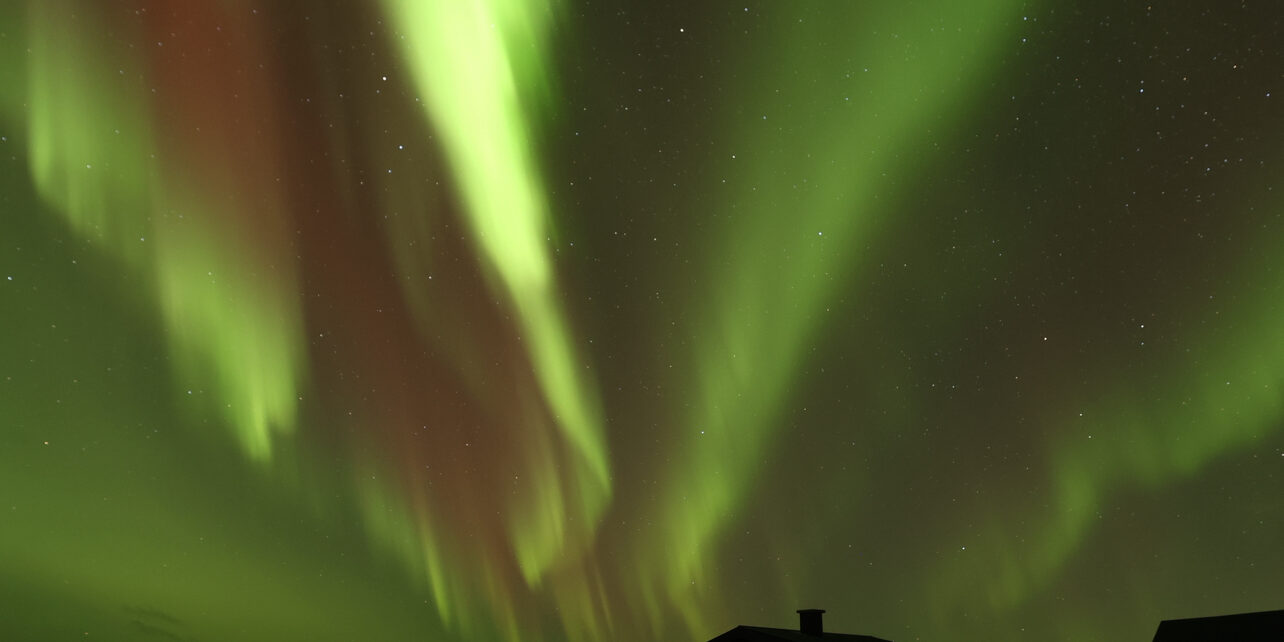
I fondly recall my first winter visit to Iceland. Daylight was sparse, the nights were cold, and the landscape transformed into a wintry tundra. And the light, oh, the light. Skies glowed with muted blues in the early morning, crimson sunsets blazed across the volcanic flatlands, and the mountains sparkled silver under the sun. On a clear night, the sky danced green and purple; ribbons of glorious aurora stretched above me from horizon to horizon. Overwhelmed by its unfathomable beauty, I cried.
I remember the cold, the relentless pins and needles on my fingertips, the desperate scrunch of my toes to keep them warm in my boots as I stood outside watching the sky.
Snowfall was magical. Horses pranced in the white fields. I slipped and slid across the parking lots at Bonus and Orkun, watching an elderly couple seem to have little trouble walking across the ice. Wind whipped on the drive back to the cabin, sending snowflakes across the road in a fury. I returned just in time to receive the alerts on my app. The roads were closed for travel.
The evening held a quiet contentment. I sat curled on the couch, listening to the wind howl, watching the snowfall collect and transform the landscape. Comforted by my heavy lopapeysu and Icelandic herb tea, it felt perfect.
Sunrise was unreal. Pastel glitter clouds graced the sky, then gave way to burning yellow light, casting a golden glow across the snow-capped mountains. A fresh scent filled the air, and if you listened closely, you could hear distant waves pound the beaches as if a war raged between land and sea. My hands stuck to the inside of the paper bag holding the sweet snuður I always had to have.
I don’t expect everyone to understand these feelings I have experienced there. Sometimes, I meet another traveler who describes this odd feeling of coming home when they reach Iceland. This peculiar homesickness, or longing, is hard to put into words.
I wish I could make sense of it, and I would be lying if I didn’t try to seek answers. The more I seek them, the more they elude me, and the attachment only grows stronger with time: this insatiable desire to be there, to see the light, to touch the earth, to simply put down roots;
To be home.
Goða ferð,
Arielle
If you are interested in reading more about winter in Iceland, such as what to pack or how to photograph the Northern Lights, you can check out these articles I wrote:
A Guide for Stunning Northern Lights Photography
Winter Wonders: Exploring Iceland in Winter