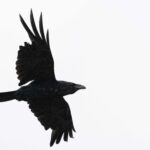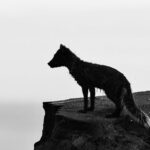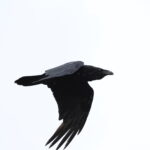
The raven slept in a rock rift. On a cold winter’s night. There are many things that can hurt him. Everything is frozen outside. – Jón Thoroddsen (The Raven’s Song, Krummavisur)
I love all birds, but ravens are really special to me. All across the world, these corvids hold significance in a variety of cultures and in everyday life. From wild ravens to rehabbed ones, they leave their mark on both urban and remote landscapes and in people’s hearts.
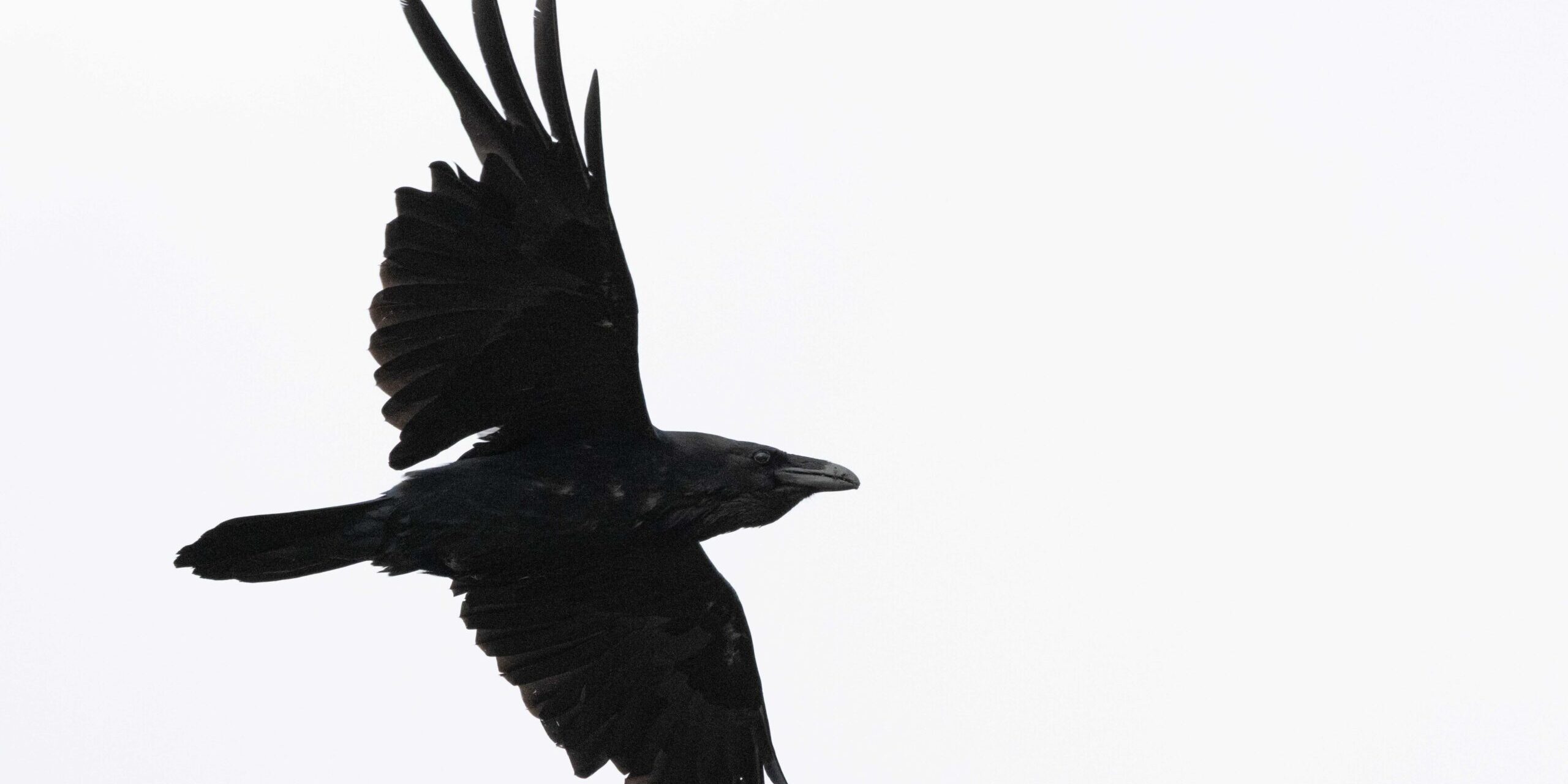
I recently had the pleasure of observing and photographing ravens on Hornstrandir, a remote part of Iceland’s West Fjords Region. I can’t quite explain why I feel this, but there is something about a raven’s watchful eyes that feels all-knowing. If any of our feathered friends hold secrets to the universe and beyond, I bet it’s them.
Here is a story about my love for ravens, a few strange dreams I had, and their significance in Icelandic culture.
Ravens and I
It was my interest in Norse Mythology, specifically my fascination with Odin’s ravens and Valkyries, that brought me to Iceland in 2021. I was in the process of writing my second book based on the stories from the Edda when I decided to see Iceland with my own eyes.
Iceland did not disappoint. From day one, I had a peculiar sense of familiarity. I was in awe of the landscapes: the green, misty slopes, the rainbows across the geothermal rivers, and the waterfalls that tumbled from the skies. My Icelandic seduction had begun, and I would return many times for many reasons to adventure, photograph, experience, and be in the land of fire and ice.
Throughout my trips, I had many encounters with ravens. One of my favorites was watching one take apart the Christmas decor in Reykjavik. Every tear and bell clang deserved a pause and ” ha ha” from the black-feathered magician because clearly he was brilliant.
Another was more recent on Hornstrandir, where I attended a group trip to photograph Arctic foxes. There was an entire squad of ravens that would patrol the beach several times a day with watchful eyes. High above, they would soar, occasionally landing atop the cliffs, their array of vocalizations echoing along the dunes.
It was fascinating to see the complex relationship between the ravens and the Arctic foxes. Where there were Arctic foxes, the ravens were not too far. It makes sense. Both are cunning, crafty, opportunistic scavengers. However, one morning, three other photographers and I witnessed the horror as a raven took an Arctic fox cub who became a little too curious away. We did not know if the cub was alive or had perished prior. It was shocking to see, but nature has its course.
To some people, ravens do have a bad rap. Harbingers of doom. Death omens. Demon birds.
However, I feel differently. When I see a raven in the wild, I get excited. I don’t just see a bird; I see a friend. I am not entirely sure why I feel this way. But I know I am not alone. Some choose to believe ravens are bad omens, but others, like myself, believe ravens are magical messengers and, even if you are lucky, really good friends.
My Dreams
Here are two dreams I had about ravens and Iceland that have made an impression on me.
It was one of those dreams that you know is a dream but feels so real. I had fallen asleep on the sofa bed in my small Airbnb. It had been several hours since I had returned from a drive on the dark, winding roads. Winter nights in Iceland always felt so mysterious, but a new mystery weighed on me as I had fallen asleep. “What happened to my mother’s bracelet?”
Did it fall off in the caves? Somewhere in the car, or along the one stop I had made on the way back at an overlook. An image of it lying in the snow flashed in my mind. Then it was gone.
In this dream, there was no place. No surroundings I could recall or analyze. It was just a very large talking raven who introduced himself as memory and me. “I am memory,” he said. “And you cannot have the bracelet back.” And that is all he said before flying off.
I awakened with an immediate recollection of the dream. I planned to backtrack and drive the entire road I had driven the night before to search for it, but when I looked on my maps, I could not find the route it had taken me. That’s when I realized perhaps the bracelet was meant to be lost. It was meant to stay in Iceland. It, like the memories of my mother, belonged here.
Dream 2:
It was Iceland, but it wasn’t. There were no black lava fields or emerald hillsides, but a heavy mist that shrouded everything. I stood, confused as to why I had returned to Iceland. I was frustrated, sad, and angry. “Why am I here? Why do I need to come back here?”
The mist cleared to reveal a single raven perched on a fence constructed of wooden posts and wire. “Croak,” it said, and then it flew off.
Ravens and Icelandic Folklore
I have no explanation for the dreams I had with ravens. All I know is that I had them, and that there are many stories out there about ravens as a link to the “otherworldly” or as messengers from the unseen.
The disappearance of my mother’s bracelet was very odd. I had not removed it from my wrist for years. It had survived many adventures, including two mile-long open water swims and triathlons. But somehow, it released from my wrist and stayed in Iceland. Maybe a raven has it!
Ravens are a cherished bird among most Icelanders and have deep roots in Icelandic folklore, appearing often in the Icelandic Sagas, a celebrated collection of stories that detail the lives of the first Norse Settlers.
In Iceland, ravens are also referred to as “Krummi,” an affectionate nickname, an ode to the bird’s intelligence, cleverness, and mysticism.
Here are several examples of ravens playing a key part in Icelandic history and folklore:
- In Norse mythology, the head god of the Æsir, Odin, has two ravens, whom he named Huginn (Thought) and Muninn (Memory), who fly about the worlds and see all things. They are often depicted perched on his shoulder in both old and contemporary art. One of Odin’s kennings is “Raven- god.”
- In the Icelandic sagas, ravens are traditional symbols of battle and often used in kennings to describe the bloodshed from battle, such as in the poem Höfuðlausn, where the character Egill uses “swarning of ravens” to describe the flocking of ravens to the battlefield.
- In the Völsung Saga, the Valkyrie Hljod uses a raven’s skin (krákuhamr) to transform into a raven. This is similar to the goddess Freyja, who has the valshamr, a cloak that she wears to transform into a falcon.
- In classic poems such as Hrafnsmàl, “Raven’s Speech,” a Valkyrie converses directly with a raven. Valkyries are fierce women depicted in Norse Mythology and the Icelandic Sagas. They are associated with war, death, the god Odin, and the goddess Freyja. In this poem, a white-haired Valkyrie receives counsel from the raven, who is referred to as the kenning “skull picker of Hymir.” (Hymir is a giant, and ravens are often associated with eating corpses, like vultures.)
- In the Landnámabók (Book of Settlements), the Viking-age explorer Floki uses three ravens, which he deploys from his ship to guide him to Iceland. This earned him the nickname “Raven-Flóki,” and this story is told in detail at the “The Viking Town” museum on Westman Island, which I highly recommend a stop!
- One of my favorite Icelandic folktales is “The Raven at Skiðastaðir,” which is about a young girl who feeds table scraps to ravens, and they return to guide her to safety from a catastrophic landslide. I had a raven warn me about a fallen hornet’s nest once on the ground during a hike, so I believe this story!
Contemporary Placement of Ravens
Ravens still hold a special place in many people’s lives in Iceland and across the globe. There are approximately 2,500 nesting pairs of Ravens in Iceland and the island’s only native corvid. Here are a few examples you may find in Iceland today:
- The Icelandic poet Jón Thoroddsen’s “Krummavisur,” or “The Raven’s Song,” is about two hungry ravens who look for food on a wintry night.
- The namesake “Hrafn,” which translates to “Raven,” is often used as a name for a place or a person. For example, Hrafnagil ( Raven’s Gully) is a small valley and village in Iceland.
- A raven is the official emblem of the Icelandic Institute of National History.
- Many locals revere ravens as highly intelligent and feed them through the dark winter months.
- Ravens are often associated with mysticism and viewed as messengers from the otherworld across a variety of cultures, not just Icelandic ones.
Facts about the Common Raven (Corvus Corax)
My love for ravens comes from a deep emotional connection to these black-feathered shadows. Besides being fascinated by their intelligence and ability to mimic sounds, I find them very interesting birds that I want to befriend every time I see one!
Here are a few facts about the Common Raven sure to impress anyone: (Source: The Audubon Society)
- Common ravens have intelligence comparable to that of common apes and have shown they can problem-solve, plan, and hold a grudge.
- Ravens are often confused with crows; however, ravens are much larger, standing an impressive 2 feet high, compared to crows, which average 16-21 inches.
- Common ravens are highly skilled aerialists and can fly upside down for up to half a mile! Ever see one in the wild do a barrel roll mid-air? I have, and it’s amazing!
- In the wild, ravens have been observed using “tools” such as stones or other objects to manipulate their environment and ward off potential threats.
Ravens in Literature
- The Raven by Edgar Alan Poe
- Macbeth by William Shakespeare
- Norse Mythology “Odin’s Raven” Prose and Poetic Edda
- Welsh Mythology
- Barnaby Rudge by Charles Dickens
- Egill’s Saga
- The Three Ravens folk ballad by Thomas Ravenscroft
What is útgard?
Útgard in Norse mythology refers to the “outer limits” or outlands. It is often used interchangeably in modern translations with the mythological realm Jotunheim, where giants, aka “jotuns,” live. It is a place featured in my mythology books. It is not a kind place, but a wild land, rich with rugged landscapes, unpredictable weather, unseen forces, magic, and chaos.
It reminds me a lot of how I still see the untouched places in Iceland, like Hornstrandir, free and wild.
Ravens, to me, evoke this bridge between the known and the unknown. They are the omens, the all-seeing, the intellect of the sky. If such a place as Útgard exists, I bet they go there.
If you are interested in reading a heartwarming and inspiring story about ravens, I highly suggest “Raising Loki” by Elliot Manarin. This memoir follows the story of a raven and a man who save each other.
Now it’s your turn! How do you feel about ravens? Did you see any in Iceland, and what did you observe? If ravens are these magical messengers, or if you believe they are, what would you tell them?
If you want to read more about my experience documenting the story of the Arctic foxes in Hornstrandir, check out this post for details and rare images: Survival: The Story of the Arctic Fox.
If you are interested in Norse mythology, check out my page dedicated to it here.