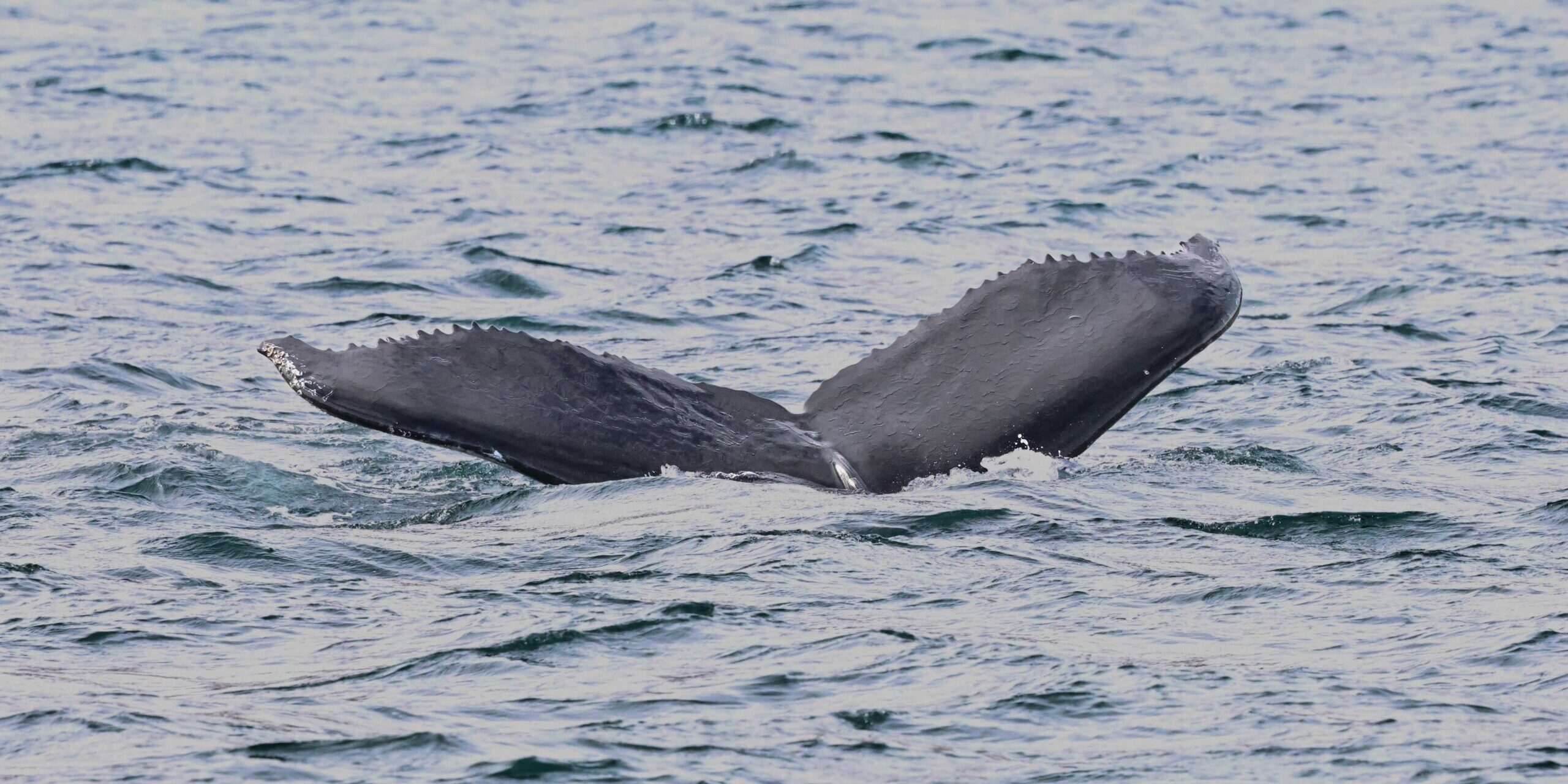
The opposite of life is not death, it’s indifference. – Elie Wiesel
Recent events in Iceland prompted me to speak up about my opinion to end commercial whaling. After all, animal cruelty is not a national issue; it is a planetary issue. If we are not a voice for animals, then who will be?
As an animal lover, it goes without saying that I oppose commercial whaling. I have read the arguments from both sides. I have followed the news closely and done the research.
In this blog post, I will share my opinions as well as facts about why I oppose whaling.
My Opinion On Whaling
We are all entitled to have an opinion about world issues. Politics and economics differ due to personal biases, experiences, belief systems, cultures, faith, and education. However, when it comes to humanitarian and animal welfare rights, we really should all be on the same page. After all, it is our responsibility to care for our home, the planet, and the nature we share it with.
Animals are sentient beings. We really do not know the level at which they feel emotions. We can’t say for sure that animals do not possess souls or feel the way we do. I choose to believe they can feel. They do have souls. We have just become so disconnected in modern-day life that this idea seems ridiculous to some. We have separated ourselves from them: humans are the superior race, and animals are just, well, kinda there, cohabiting, providing food, sport, and entertainment.
I choose to see animals differently. I am not superior. They all deserve space, rights, a voice, the ability to live in peace, and not to suffer unnecessarily. Everyone, from the cricket in my yard to the whale in the ocean, deserves to live as they are intended to live. Whaling is unnecessary. It is exploitation for money. It is unnecessary. It is cruel, and it needs to end.
There is nothing anyone can say to me to convince me that whaling should continue because of its cultural significance in Iceland. This is bullshit. At one point in history, whales were hunted as a vital source of survival ( circa 12th century). This is no longer necessary in Iceland.
The exception to this is the indigenous tribes of Alaska who hunt whales for sustenance. This hunt is approved by the Marine Mammal Act and is highly quota-regulated.
Iceland’s whale hunt is solely for profit and directly violates the International Whaling Commission’s Global Moratorium on Commercial Whaling. Let’s be real. Whale meat is not a necessity, and from an economic standpoint, whales swimming in the fjord are much more valuable to Iceland’s tourism than on a plate.
Just because something happened in history doesn’t mean it should continue. As a species, we are evolving, and this should include sustainable ways of living. Hunting whales is not it.
The Facts About Whaling
In 1982, the International Whaling Commission enacted the Global Moratorium on Whaling, which called for a pause on whaling from 1982 onwards. The exception to this is Iceland and Norway, which objected.
I am not going to recount the recent events in Iceland this year involving the company conducting commercial whaling, Hvalur 8. To be honest, they disturb me so much that I can’t write about them, and you can read about them for yourself on any of the Icelandic news stations or on the Paul Watson Foundation website.
Here are the facts that support my opposition to whaling:
- There is no humane way to kill a whale. Whalers use harpoon cannons, which means whales often suffer a prolonged death. During Iceland’s whaling season, a male fin whale was harpooned four times and suffered for thirty-one minutes before passing. This is unacceptable.
- Whales have slow reproduction rates, meaning it takes longer for their populations to rise.
- Whales play a vital role in our marine ecosystems. If you have ever participated in a beach cleanup, you know our oceans need all the help they can get. Whales capture and store a massive amount of CO2 in their lifetimes. Furthermore, they fertilize phytoplankton, the foundation of food for aquatic life. Phytoplankton also produce over half of the world’s oxygen! It is insane that a microscopic plant is the foundation not only of ocean life but of all life.
- According to MarketIntelo, international tourists account for 61% of whale watching in Iceland and generated $1.59 billion in revenue in 2025. That is huge.
- Whale watching yields far greater economic benefits than whaling. It is believed a live whale can produce over 1 million in revenue. Studies such as this one have demonstrated the positive impact ethical whale watching has on the ocean, conservation, and communities. Live whales are essential for ecotourism, conservation, and ocean observation. You can read more about whale watching here.
My Disappointment
In 2021, when I first visited Iceland, I was taken aback by how clean the nature preserves and open spaces were. It actually brought tears to my eyes.
However, since then, I have noted a huge shift in mindfulness regarding open spaces, nature, and the continuation of whaling. Two years ago, I contacted The Blue Army in Iceland to report and discuss a bird refuge I had visited on Reykjanes that was so littered with trash it was appalling. I am not talking about a few pieces of plastic here and there. Birds were literally wading in garbage like old chicken carcasses, plastic bags, and old clothing. I had to do something about it.
The Blue Army took action, and a few weeks later I arrived in Iceland to visit the refuge and participate in a beach cleanup at another location, in collaboration with the US Navy and US Embassy. I am American, but foremost I am human, and these issues like whaling and clean beaches should unite us. They are issues we should all solve together, and they transcend borders.
Organizations like The Blue Army are doing incredible work, but they can’t do it alone. ‘
I know some people will say, “How dare you speak your opinion about this. You are not an Icelandic citizen!” My nation is far from perfect; who am I to make my opinion about whaling public? My answer is simple: How dare I not? Who am I if I don’t speak for animals? Who am I if I don’t speak up against animal cruelty? I would be a coward.
When we are silent about issues, we become apathetic. Helen Keller said it best with “Science may have found a cure for most evils, but it has found no remedy for the worst of them all- the apathy of human beings.”
On that note, I should add I personally know MANY Icelanders who care deeply about their land and nature. They are mindful, sustainable, and actively defending open spaces, wildlife, and laws that protect nature. I also know many who oppose whaling, and who are actively engaging in protests to abolish it. I stand with you, and I applaud you for speaking up.
Americans account for 1/3 of Iceland’s tourism, a huge sector of its economy. So we need to speak up. We should speak up. If you disagree with whaling, I urge you to sign this petition. Write letters and comments, and share the news.
If you are visiting Iceland, I highly recommend checking out Husavik and booking a whale watching tour with North Sailing.
It is true that one man can cause a lot of destruction; however, one woman, as demonstrated by Sigriður Tómasdóttir (Iceland’s first environmentalist), saved Gullfoss (the famous Icelandic waterfall) from a hydroelectric dam.
Together we can be a voice for these majestic creatures in the sea.