Nature has enriched my life. It has made it worth living. It has brought me joy, healed me, awed me, and given me a reason to get out of bed in the morning.
– Arielle L
It was a perfect day. My steps slowed along the winding path. Beside me, a river snaked silver, between fields of heather. My only companions were a trio of mountain sheep and the birds.
My attention shifted to the strange sound above. This sound is the sound that would forever be the sound of Iceland for me. It became the sound I craved, the sound I would listen to at home when my heart began to drift to Iceland’s midnight sun.
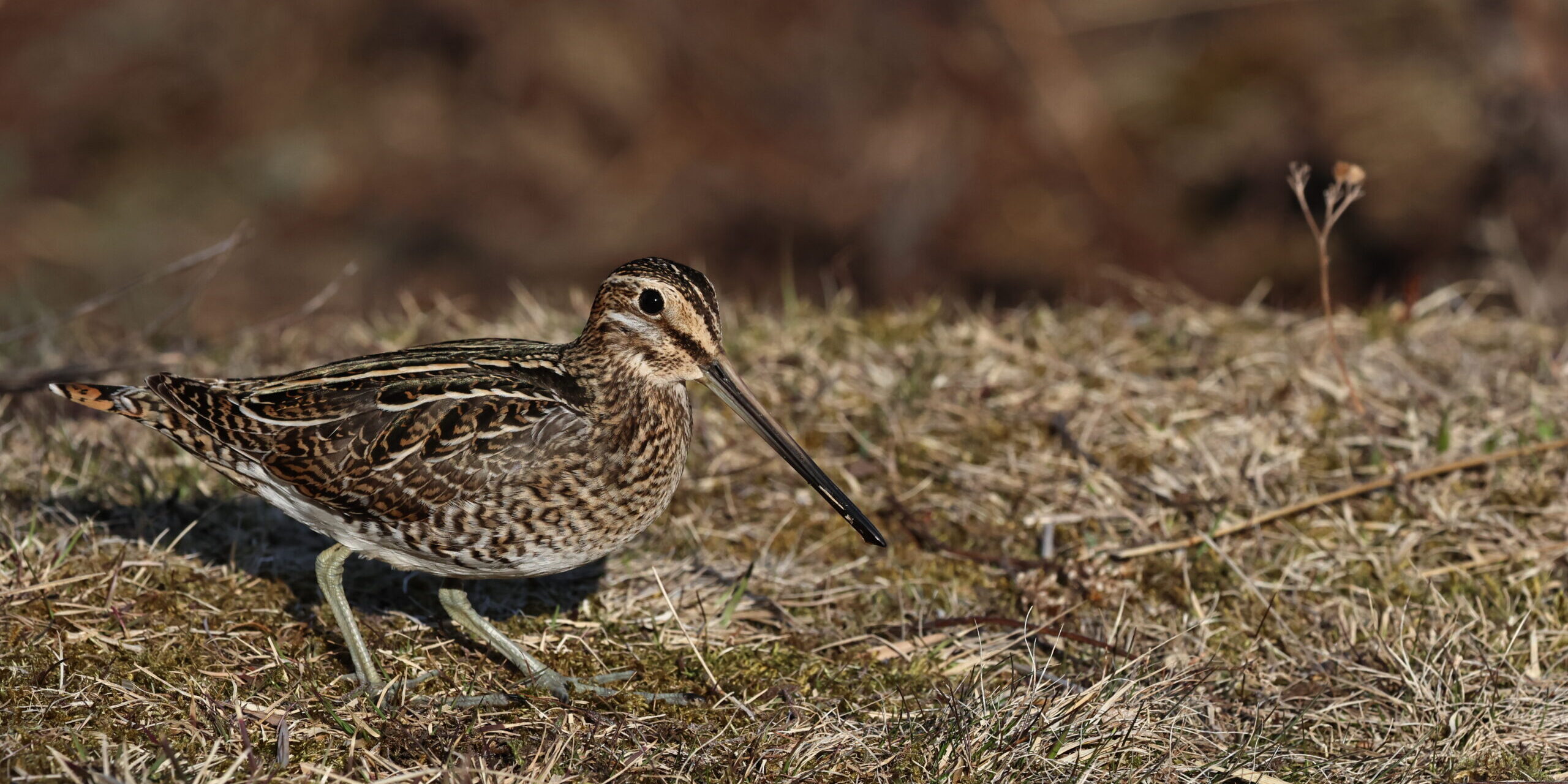
It was the sound of the Common Snipe, a bird that stole my heart, and I was determined to photograph it.
The Common Snipe
If you have visited Iceland in the spring or summer months, you most likely have heard or seen a Common Snipe. Ask any Icelander, and they will say, “Hrossaguakur,” an affectionate name given to this little icon meaning “horse cuckoo,” named after the sound created by the male’s tail feather shimmy during courtship.
The Common Snipe is a small, plump wader that is a member of the sandpiper family. It is the cousin of the North American Wilson’s Snipe but prefers marshes and mudflats over forests.
Every spring, Iceland’s soundscape enlivens as males take to the skies for an impressive courtship display in the hopes of winning over a willing female.
During this acrobatic display, the male’s tail feathers shake, producing a recognizable sound known as “winnowing” or “drumming,” which to some resembles the sound of a horse whinny. Below, in the grasslands and moors, females listen and judge the winnows, deciding who will be their partner for the summer season.
The show seems to run all day, but is liveliest at night.
It all looks a bit exhausting, and I wonder how they have the energy for this after completing their annual migration from Europe!
Snipe Facts
- Along with winnowing, Snipes also produce a repetitive, loud “peep” from the ground and another “cry” when startled, and they take flight, often in an erratic pattern, to escape threats.
- Snipes are outfitted with extra-long, sensitive beaks, which help them probe for food, such as earthworms and invertebrates.
- Common Snipes prefer marshes and mudflats as habitats and, like many of our waders, are decreasing in population across Europe, with the biggest loss seen in younger birds.
- According to my research, this is theorized due to migratory habitat loss. Waders that migrate often tire, especially if they have to travel farther than usual to reach suitable habitat.
- Common Snipes do not mate for life but are monogamous for the breeding season. The females will choose a male based on the most impressive winnow as well as suitable nesting territory.
- The pair raises the chicks together but go their own ways once they fledge.
- What makes Snipes tricky to locate is their perfect camouflage in their habitat and eyes set far back on their heads, giving them a full 360-degree view, which makes them extra tricky to photograph.
However, I was determined, and my deep affections for one of Iceland’s most adored birds would pay off.
My Little Wader Bird
When I arrived in Iceland for the spring migration, my primary objective was to photograph this little wader, but I knew it would not be easy.
Some species, like Arctic Terns, practically come looking for you, and as long as you remain still and keep your distance, another popular bird with photographers, the Atlantic puffins, are easy to find with their colorful beaks and black and white plumage.
However, Snipes are the exact color of their marshy habitats and even flatten themselves out to blend in even more, making them extra tricky to spot, let alone photograph!
For this birding adventure, I chose Hrísey Island as my home base, a place rich with diverse habitats and bird life, especially the Common Snipe.
After some scouting, I chose a few locations on the island to stake out and wait. Looking for Snipes is very challenging. The birds often see you before you see them and flush so fast you barely have a chance to lift your camera.
Due to previous visits, I was familiar with Hrisey’s layout, but it still required a strategy to find the Snipes. Along with marshes and heather moors, Hrísey has beaches, mudflats, sea cliffs, forests, and a harbor home to Black Guillemots and a variety of duck species.
It also has its own dedicated birding path and blind, perfect for spotting elusive species such as the Red Throated Loon and our subject, the Common Snipe.
The locations I chose were two marshes and a grassy area with ample open space for males to take to the sky. Every day, I would head out for two sessions, one in the morning and then one again in the evening, which allowed for ample time for when the males are most active.
This approach was time-consuming and required a ton of patience, but it was well worth it. I left Iceland with several photographs I was very happy with, and many good observation memories.
I didn’t capture everything. There was one encounter where a Snipe landed so close to me and after observing me decided he would start towards me!
I felt so terrible about startling him, and I was enjoying the close encounter so much that I decided to just watch. Although I am certain this would have produced some great footage, the connection I experienced in that moment was worth more.
It can be difficult as a wildlife photographer to remember to put down the camera and look away from the viewfinder, especially when that certain someone we have been waiting for shows us.
But doing so reminds us why we are doing this. Doing so reconnects us to the being behind the feathers, and that connection is crucial to nature’s survival because it fosters love.
Bird Photography Tips
It goes without saying that photographing the Common Snipe requires patience and time. It also helps to camouflage yourself or locate a bird blind ( or bring your own!) at the many bird watching refuges in Iceland.
On Hrísey, a blind is located at the pond that the bird-watching path leads to. The pond is home to many migratory birds, such as Arctic Terns, Red-throated Loons, and Tufted Ducks.
Equipment you will need:
- Telephoto lens. I use a 100-500 mm but the more reach the better!
- A tripod with a gimbal head if you plan on video
- Mirrorless or DSLR camera
- Rain gear and/poncho
- Warm layers
- Camera bag with a waterproof jacket
- External mic if you want to take sound recordings
Settings:
Every camera, photographer, and lens is different, so settings will vary depending on your setup, you, and time of day. Here are my most popular settings for photographing Snipes with my Canon R7 and RF 100-500 mm.
- Still birds/portraits: f/ 7.1- 8.0 1/ 1000- 1/2000 Focus is set to One Point AF and exposure comp varies. I find Snipes easier to expose properly than Puffin because they are not black-and-white, which can be trickier.
- Snipes in flight: f/ 8.0- f/9.0 1/3200 – 1/4000. I usually leave BIFs ( birds in flight) for sunny days, because why torture myself by trying to use a high shutter speed on a day with little light? On overcast days, I usually focus on stills and portraits. Not to discourage you from trying a BIF on these days, but I would prefer to leave those for days with better conditions.
Other Tips:
- Remember, the game is patience. Snipes are more active at night, so the midnight sun is the perfect time of year to photograph them along with other species such as Puffins, Guillemots, and Terns!
- Locate an open area where male Snipes are winnowing. You are looking for a bird with a long beak that climbs into the air and then dives down. You will most likely hear them before you see them!
- Photographing Snipes in the air is super tricky but can be done! I recommend locking in on the bird during his climb phase, then being prepared for some fast tracking when he dives!
- Get low and move slow. Low to animals means less threat. Plus, it offers a lovely POV for an image.
- This goes without saying, but always practice ethical photography. This means no intentional flushing, no baiting with sound or food, and keep your distance unless the bird approaches you.
Hrísey Island
Known as the “jewel of the North,” Hrisey is a small subarctic island off of Iceland’s North coast. At only 7km long and 3 km wide, it is a surprise how rich the island is in bird life, diverse habitats, and interesting landscapes.
Tucked inside the picturesque Eyjafjordur, Hrisey offers visitors a tranquil setting for nature hikes, immersion, and birding and is a prime spot for bird photography.
Furthermore the locals are pleasant and I have experienced some of the most breathtaking sunsets on Hrisey.
You can reach Hrisey by way of ferry from the small town of Arskosandur, which is a forty-minute drive from Akureyri. You can check the ferry schedule here.
You can read more about Hrisey here.
Although Hrisey has several hiking paths, one of my favorite things to do there is to pack a thermos of tea, find a spot near the sea cliffs or the marshes, and just lie down. Sometimes I close my eyes and just listen.
It is a place where nature can just take you away!
What’s Next
If someone were to ask me what the most important ingredient is to wildlife photography, I would say love.
Patience and determination are a big part of it, along with skill, equipment, and time, but it all begins with love.
Now love won’t buy you the camera or telephoto lens but it will give you the patience to sit and wait. It will keep you ethical because you don’t harm things you love, and it will keep you going.
It will also give you a reason, and this is crucial because wildlife photography has many uncontrollable challenges that can make it easy to want to give up.
There are many reasons why people take up bird photography. I naturally gravitated towards it when I was a child, and found it again as an adult.
Besides loving the process of getting out there, I love my subjects, and that is what keeps me going. It is a deep-rooted desire to use my photography for good; to raise awareness of our birds who are losing a battle, and to create empathy between the viewers and my subject.
When you love something, you protect it. This is very true. If we all learn to love nature, any part of it, from the smallest beings to the largest, we will do our part to protect it. This could mean starting a native garden, using less plastic, donating money to Audubon, signing petitions to protect habitats, or even taking it further by pursuing a career in conservation.
We all have a part to play, and every little bit matters.
I am hoping the footage I captured of this shy bird creates interest. I am hoping it raises awareness for our waders and their habitats.
My next project involves exploring our connection to nature, specifically birds and vast spaces such as oceans and grasslands. Nature has enriched my life. It has made it worth living. It has brought me joy, healed me, awed me, and gave me a reason to get out of bed in the morning.
This connection has fueled my desire to take action and do whatever I can in this lifetime to protect it.
I want to hear from you. How have nature and birds enriched your life? Do you have a favorite bird, and if so, why?
In the meantime, enjoy this footage I captured of the Common Snipe in their habitat on Hrísey island.